Victory Monument Riga: what it means, who visits, and the honest context
What is the Victory Monument in Riga and why is it controversial?
The Victory Monument (Uzvaras piemineklis) in Pārdaugava was erected in 1985 to mark the 40th anniversary of the Soviet victory over Nazi Germany. For ethnic Latvians, it represents Soviet occupation; for many Russian-speaking residents, it commemorates relatives who died in World War II. The monument remains standing but is the subject of ongoing political debate in Latvia.
What the Victory Monument is
The Victory Monument (Uzvaras piemineklis, literally “Victory Memorial”) stands in Uzvaras parks (Victory Park) in the Pārdaugava district, on the left (west) bank of the Daugava River, approximately 3 km from Riga’s Old Town. It was built between 1982 and 1985 and unveiled on 5 May 1985, the 40th anniversary of the Soviet Union’s victory over Nazi Germany in World War II.
The monument consists of a 79-metre concrete column topped by three gold stars (representing the three Baltic Soviet Republics in the Soviet Union’s iconography) with a large allegorical sculpture at the base depicting soldiers and civilians. The inscription reads “To the Soviet Army and Navy” — a standard Soviet memorial inscription of the period.
The monument’s construction in Riga in 1985 was a deliberate political act. It was built in a country that had been incorporated into the Soviet Union by force in 1940 — an annexation that the United States, the United Kingdom, and most Western democracies never formally recognised as legal — and that had experienced the deportation of approximately 60,000 people in 1941 and 1949, the suppression of Latvian culture and language, and 45 years of occupation. To build a monument celebrating the Soviet state in this context was, from the Latvian perspective, an assertion of the legitimacy of the occupation itself.
From the perspective of the Russian-speaking community in Riga — which comprises roughly 35–40% of the city’s population and includes descendants of both pre-war Russian residents and postwar Soviet settlers — the monument commemorates a genuine historical event in which their relatives fought and died, and its meaning is not reducible to its political context.
Both of these interpretations are real and genuinely held. Understanding this is the prerequisite for understanding why the monument remains standing and remains contested.
Understand the full Soviet-era context with a guided walking tour (€25, 3 hours)The events of 2022 and the removal of some monuments
Russia’s full-scale invasion of Ukraine in February 2022 changed the political calculus around Soviet-era monuments across the Baltic states and Eastern Europe significantly.
In August 2022, the Riga City Council voted to remove the large sculptures at the base of the Victory Monument — the figural group depicting soldiers and civilians — as well as associated elements. The column itself remains standing as of May 2026. This partial removal was controversial: Latvian nationalists argued it did not go far enough; the Russian-speaking community argued it was an attack on their memorial culture.
The Monument to the Liberators of Soviet Latvia (a separate monument in Pārdaugava, also known as the “Red Army monument” or “Nāleja”) was removed in its entirety in 2022.
These removals were part of a broader process across Eastern Europe in which Soviet-era monuments — particularly those celebrating the Soviet Army — have been removed, relocated to museums, or left standing in the context of ongoing political debate.
The current status (May 2026) of the Victory Monument column should be verified before visiting if the monument’s physical state is the primary reason for your visit.
The deportations: the context the monument elides
The “Victory” that the monument celebrates requires significant historical context to understand from a Latvian perspective.
June 14, 1941. The night of June 14–15, 1941 — less than two weeks before the German invasion began — Soviet NKVD forces carried out the largest single deportation in Latvian history. Approximately 15,000 Latvians were arrested and loaded onto trains: men to labour camps in Siberia, women and children to “special settlements.” The lists had been compiled over the previous year from files held at the Corner House. Roughly 5,000 people died in the first year of deportation from cold, hunger, and disease.
March 25, 1949. The second major deportation, Operation Priboi (“Coastal Surf”), involved approximately 43,000 Latvians deported in three days. The primary targets were the families of “forest brothers” (armed resistance fighters) and farmers who had refused collectivisation. The deportation effectively crushed armed resistance and forced collectivisation on the remaining agricultural population.
Between these two major deportation operations, smaller-scale arrests, executions, and forced relocations continued throughout the occupation period. The total number of Latvians deported or imprisoned by the Soviet authorities over the full occupation period is estimated at over 100,000 — out of a pre-war population of approximately 1.9 million.
The Victory Monument was built in a country where the state being celebrated by the monument was the same state that had carried out these deportations. From a Latvian perspective, this is not a peripheral consideration — it is the central fact about the monument’s meaning.
The June 14 commemoration
Every year on June 14, Latvians gather at the Freedom Monument in central Riga and at other sites across the country to commemorate the victims of the 1941 deportation. This is one of the most important dates in the Latvian civic calendar and is observed with candles, flowers, and public readings of names.
The juxtaposition between the June 14 commemoration at the Freedom Monument and the May 9 commemoration (Victory Day) at the Victory Monument — the same city, different communities, different and incompatible historical narratives — is one of the most stark examples in Europe of how the same historical events are remembered differently by different communities who live in the same place.
Explore authentic Soviet Riga stories with a local guide (€24)Practical information
Location: Uzvaras parks, Pārdaugava district. Address: Uzvaras bulvāris (Victory Boulevard), across the Daugava from central Riga.
Getting there: By Bolt from Old Town, approximately €6–7 (10–12 minutes). By bus from Old Town across the Vanšu bridge, routes toward Pārdaugava. The park is a 20-minute walk from the bridge.
What to expect: The park surrounding the monument is a public park used by local residents. There is no visitor centre, no interpretation panels, and no facilities specifically for tourists. Bring what you know with you.
Photography: The monument is in a public park and photography is unrestricted.
Timing: The monument and park are accessible at all times. The most significant gathering occurs on May 9 (Victory Day in Russia), when Russian-speaking residents bring flowers to the monument. If you want to observe this commemoration respectfully, May 9 is the appropriate day; be aware that tensions can be heightened around this date.
Honest recommendation
For most visitors to Riga, the Victory Monument is not the right first point of contact with Soviet history. The Corner House and the Museum of the Occupation — both in or near Old Town — are better structured experiences with more accessible visitor infrastructure. The Victory Monument requires significant prior knowledge to interpret, has limited visitor facilities, and involves a dedicated cross-river trip that may not fit easily into a city-break itinerary.
If you are specifically interested in post-Soviet memory politics, contested heritage, or the dynamics of Riga’s ethnically divided public culture, the Victory Monument is genuinely significant and worth the trip. For that visit, preparation — reading, or a guided tour with a guide who addresses these dimensions honestly — will make the difference between a trip across a river to look at a column and a genuine engagement with one of Europe’s most complex memorial landscapes.
See our Soviet history walking guide for the full context, and our Museum of the Occupation guide and Corner House guide for the two sites we recommend prioritising.
What the monument represents: the two narratives
The Victory Monument has two simultaneous and mutually incompatible meanings that coexist without resolution in Latvian public space.
The Soviet narrative. The monument was built to commemorate the Soviet Army’s victory over Nazi Germany in what Soviet historiography called the Great Patriotic War. In this framing, the soldiers commemorated at the monument liberated Latvia from Nazi occupation and defeated fascism. The monument represents Soviet military sacrifice and Soviet victory — a narrative that is genuine and not invented: real soldiers did die in real battles on Latvian territory between 1941 and 1945, and many of them were Latvian-born Soviet citizens.
The Latvian national narrative. For many ethnic Latvians, the Soviet “liberation” of 1944–1945 was the reimposition of an occupation that had begun in 1940, that included mass deportations of Latvian civilians, and that would continue for another 47 years. In this framing, the soldiers commemorated at the monument were the representatives of a state that would go on to suppress Latvian language, culture, and political independence. Commemorating their “victory” is, for many Latvians, commemorating their oppressors.
Both narratives are held simultaneously by Riga residents of different ethnic and generational backgrounds. The monument is, in this sense, an accurate physical representation of a divided society — it does not resolve the division, it concentrates it.
This is what makes the Victory Monument one of the most genuinely interesting public monuments in Europe: it is not a contested monument because it represents a complicated historical figure or a recent political controversy, but because it stands at the fault line of two entirely different frameworks for understanding the twentieth century. The argument is about history, identity, and sovereignty — not about aesthetics or logistics.
The Pārdaugava neighbourhood context
The Victory Monument is in Pārdaugava — the left-bank area of Riga across the Daugava river from Old Town and the New Town. Pārdaugava has historically had a higher proportion of Russian-speaking residents than the right bank, a demographic pattern that developed during the Soviet period when industrial workers were settled in the district. The neighbourhood context is relevant: the monument stands in the part of Riga where it is most naturalised into everyday life, rather than in Old Town where the visual contrast with Latvian nationalist heritage sites would be sharper.
Pārdaugava is itself worth a brief exploration — it is the part of Riga that most clearly shows the Soviet-era residential and industrial urban planning that was standard across the USSR: the panel-construction apartment blocks (khrushchyovkas), the broad arterial roads, the open spaces designed for collective rather than private use. Walking from the Akmens Bridge to the Victory Monument through the Uzvaras park (Victory Park) gives a sense of this urban landscape that visitors staying only on the right bank miss entirely.
The Kalnciema iela Saturday market (09:00–14:00) is in Pārdaugava, approximately 1.5 km from the Victory Monument. If you visit on a Saturday, combining the market with a walk through Pārdaugava and a stop at the monument is the most efficient way to use the cross-river journey.
The deportation dimension: understanding what “aftermath” means
The guide title includes “deportation and aftermath” because the Victory Monument cannot be understood in isolation from the deportation history that shapes Latvian attitudes toward the Soviet victory.
The two mass deportations — June 14, 1941 and March 25, 1949 — deported approximately 35,000 Latvian citizens to Siberia and Central Asia in two operations. The deportees were selected primarily from the Latvian political, intellectual, and farming elite — anyone who might resist Soviet consolidation. Many died in transit or in the first years in Siberia. Those who survived were not permitted to return to Latvia for a decade or more; some never returned.
The 1949 deportation was specifically designed to break the resistance of Latvian farmers who were refusing collectivisation. Within weeks of the March 1949 deportation, collective farm (kolhoz) membership in Latvia jumped from 15% to 92% of farming households — the deportation achieved its agricultural policy goal by removing the resistant population.
For Latvians whose families experienced deportation, the Soviet “victory” is inseparable from this history. The monument does not acknowledge the deportations, the occupation, or the suppression of Latvian independence — it commemorates only the military victory. This omission is the core of the symbolic conflict.
Memorial sites for the deportations are at the Forest Cemetery (Meža kapi) in Riga and at various sites around Latvia. The Museum of the Occupation covers the deportations in detail — see our guide to the Occupation Museum.
Practical information for the visit
Getting there from Old Town. The direct route is across the Akmens Bridge (10–12 minutes walk from Old Town), then through Uzvaras park (10 minutes) to the monument. The walk from the bridge through the park is part of the Pārdaugava experience and is worth doing rather than taking a taxi directly to the monument.
By Bolt. If you are going directly and don’t want the walk: approximately €5 from Old Town, 8–10 minutes depending on traffic.
Time to allow. The monument itself — the obelisk, the surrounding bronze figures, the inscriptions — takes 15–20 minutes to read carefully. Allow 30 minutes including transit through the park. If combining with the Kalnciema iela market (Saturday only) or a wider Pārdaugava walk, allow 2–3 hours for the area.
Timing. The Victory Park and monument are accessible at all hours. The monument is illuminated at night and is photographically interesting in low light. May 9 (Victory Day, the Russian national holiday) sees significant gatherings of Russian-speaking residents at the monument. The day carries heightened emotional and political charge; observe respectfully if you visit on that date.
Frequently asked questions about the Victory Monument
Can I visit the Victory Monument on May 9?
Yes. The monument is a public space and is open at all times. On May 9, visitors will find large numbers of Russian-speaking Riga residents bringing flowers and gathering to commemorate. It is an important cultural and social event for a significant part of Riga’s population. Attending respectfully as an observer is appropriate; approaching it as tourist spectacle is not.
Why hasn’t the Victory Monument been removed like other Soviet monuments in the Baltic states?
The question of monument removal has been under political debate in Latvia for many years. Estonia removed the Tallinn Bronze Soldier statue (a similar Soviet war memorial) in 2007, causing significant civil unrest in the Russian-speaking community. Latvia has so far not taken that step — partly due to the legal complexities, partly due to the risk of social conflict, and partly because the monument is in a neighbourhood where it has deep community meaning. As of 2026 the monument remains in place, though the political debate continues.
Is there a visitor centre or interpretation at the monument?
There is no dedicated visitor centre. The monument has inscription panels that require translation from Latvian and Russian to make sense to international visitors. This is the primary reason a guided tour with a guide who can address the contested nature of the monument is valuable: the physical space alone provides minimal interpretive scaffolding.
Is Pārdaugava worth visiting for reasons beyond the Victory Monument?
Yes. The Kalnciema iela Saturday artisan market is a genuine alternative to the Central Market for local, artisanal Latvian products. The neighbourhood has a Soviet-era urban character that is interesting for visitors curious about how that period shaped Riga’s urban structure. The waterfront along Ķīpsala island (north of the Vanšu bridge) is peaceful and has the Žanis Lipke Memorial. Pārdaugava is not a tourist area, which is part of its value.
Frequently asked questions
Should tourists visit the Victory Monument?
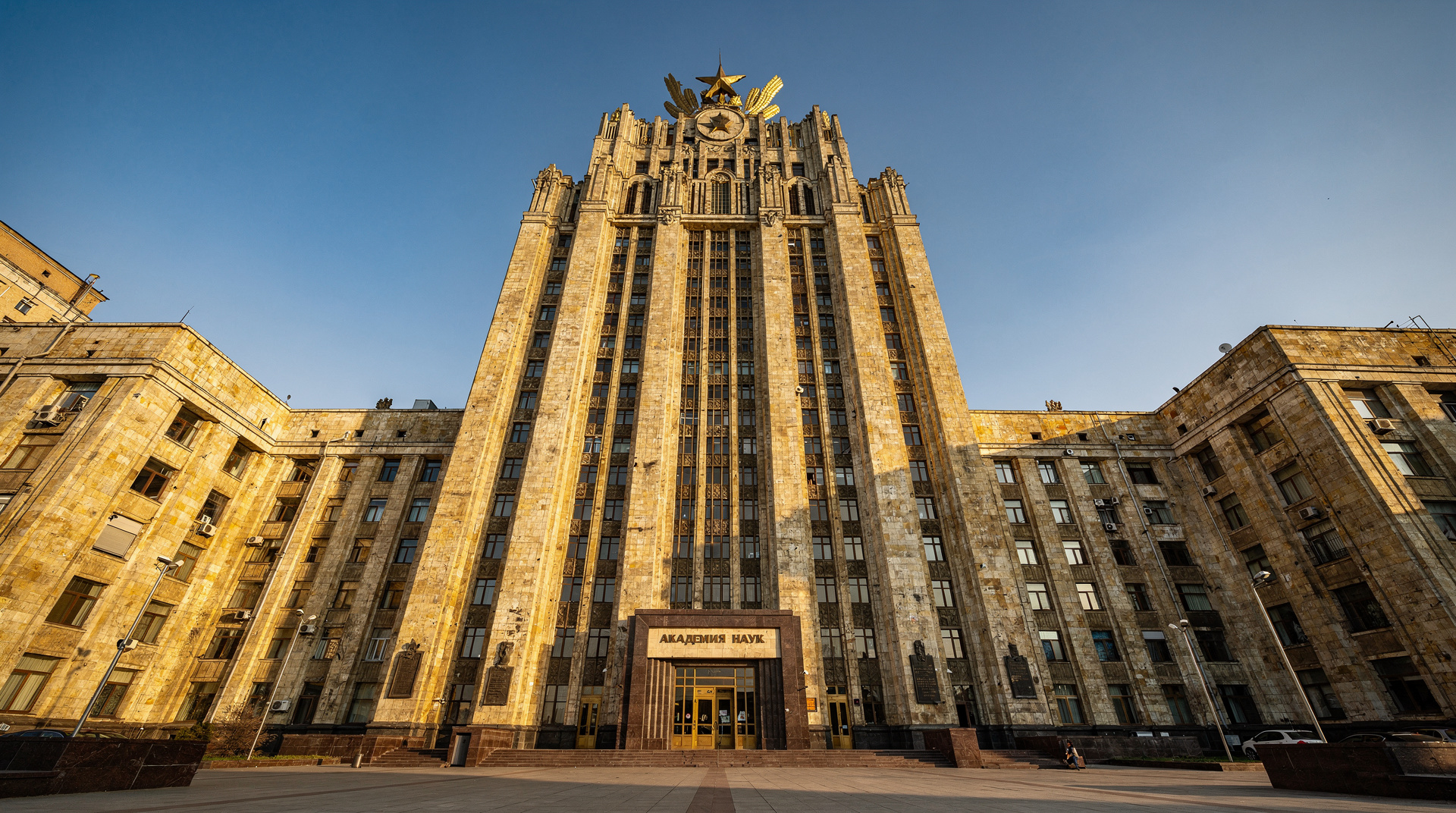
Only if you have a genuine interest in Soviet-era memorial culture and post-Soviet politics. The monument is not a tourist attraction in the conventional sense — it is a contested memorial site with no visitor infrastructure. If you want to understand it, read about it before going. If you just want a Soviet-era architectural sight, the Academy of Sciences observation deck is more accessible and has greater architectural merit.Has the Victory Monument been removed?
No, as of May 2026 the Victory Monument is still standing. The Latvian parliament has passed legislation related to Soviet-era monuments, and the Monument to the Liberators of Soviet Latvia in Pārdaugava was removed in 2022. The Victory Monument remains in place but its future is the subject of active political debate.What was the Monument to the Liberators of Soviet Latvia?
The Monument to the Liberators of Soviet Latvia was a different monument in Pārdaugava's Uzvaras parks, erected in 1985 and removed by the Riga City Council in August 2022 following Russia's invasion of Ukraine. The Victory Monument column itself was not removed; the sculptures and some associated elements were.Is the neighbourhood around the Victory Monument safe?
Pārdaugava is a normal residential neighbourhood. The Victory Monument and the surrounding Uzvaras parks are perfectly safe to visit during the day. The area is home to a significant portion of Riga's Russian-speaking population.What is the deportation context for the Victory Monument?
The monument was built during the Soviet occupation to celebrate a Soviet victory — in a country that had been forcibly occupied by that same Soviet state since 1940 and had experienced mass deportations in 1941 and 1949. Latvians see the monument as an assertion of Soviet legitimacy in a country that never accepted the occupation as legal.
Top experiences
Bookable activities with verified prices and instant confirmation on GetYourGuide.