Latvian rye bread, pelmeni and pīrāgi: what you need to know
What is the most important food to try in Riga?
Rupjmaize (dark rye bread) is the most culturally significant. Pīrāgi (bacon-filled pastries) are the most distinctly Latvian. Pelmeni (dumplings) are everywhere but are not originally Latvian — they are Russian-Siberian in origin, widespread throughout the former Soviet Union. For genuine Latvian cooking, focus on rye bread and pīrāgi first.
Rupjmaize: Latvian dark rye bread
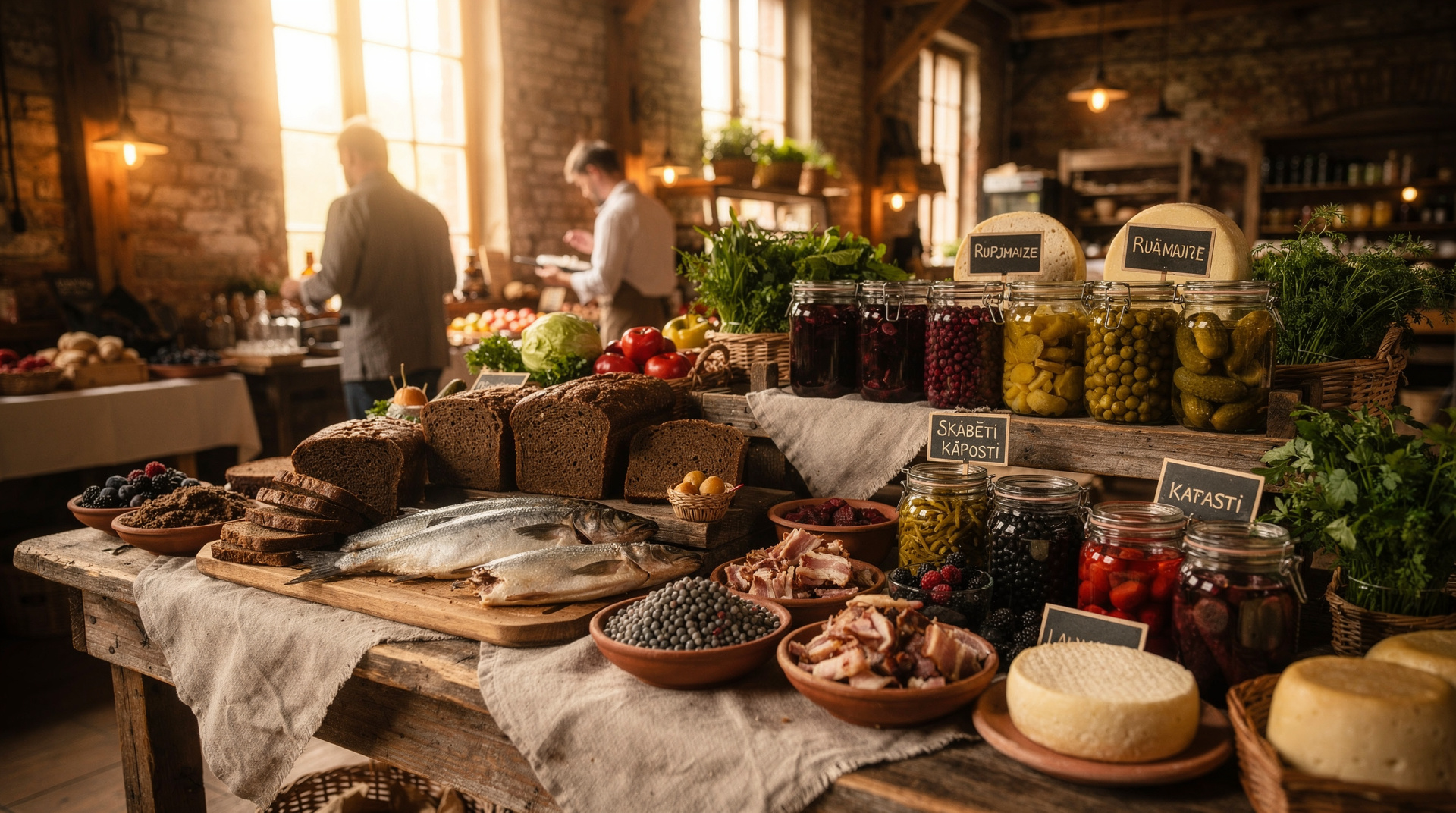
Rupjmaize is the most important food in Latvian culture — not merely a staple but a cultural symbol that Latvians take seriously in a way that goes well beyond ordinary national culinary pride.
What it is
The word “rupjmaize” means “coarse bread” and describes a loaf made from 100% rye flour (in the traditional version) or high-percentage rye with small amounts of wheat for texture, using a sourdough starter maintained over generations. The result is dense, with a tight crumb that holds together when cut, a firm dark crust, and a flavour that is characteristically sour from the fermentation process and slightly sweet from the malt used in some recipes.
The flavour profile is: earthy, slightly sour, faintly sweet, with a background bitterness from the rye that distinguishes it from wheat bread. It is designed to pair with fatty, salty, and smoked foods — the Baltic diet of smoked fish, cultured dairy, cured pork, and pickled vegetables.
The cultural weight
In Latvian culture, rye bread carries the associations that have built up over centuries of it being the primary caloric staple of the agricultural population. During the deportations of 1941 and 1949, Latvians sent to Siberia remembered Latvian rye bread as one of the things they missed most. In diaspora communities around the world, the ability to make rupjmaize is a mark of cultural continuity. In contemporary Latvia, the artisan rye bread revival is understood as a form of cultural assertion — a rejection of the industrialised wheat-bread uniformity of the Soviet period.
This is not background noise for a food guide; it is context that makes eating a slice of well-made Latvian rye bread a different experience from eating ordinary bread.
Where to find the best
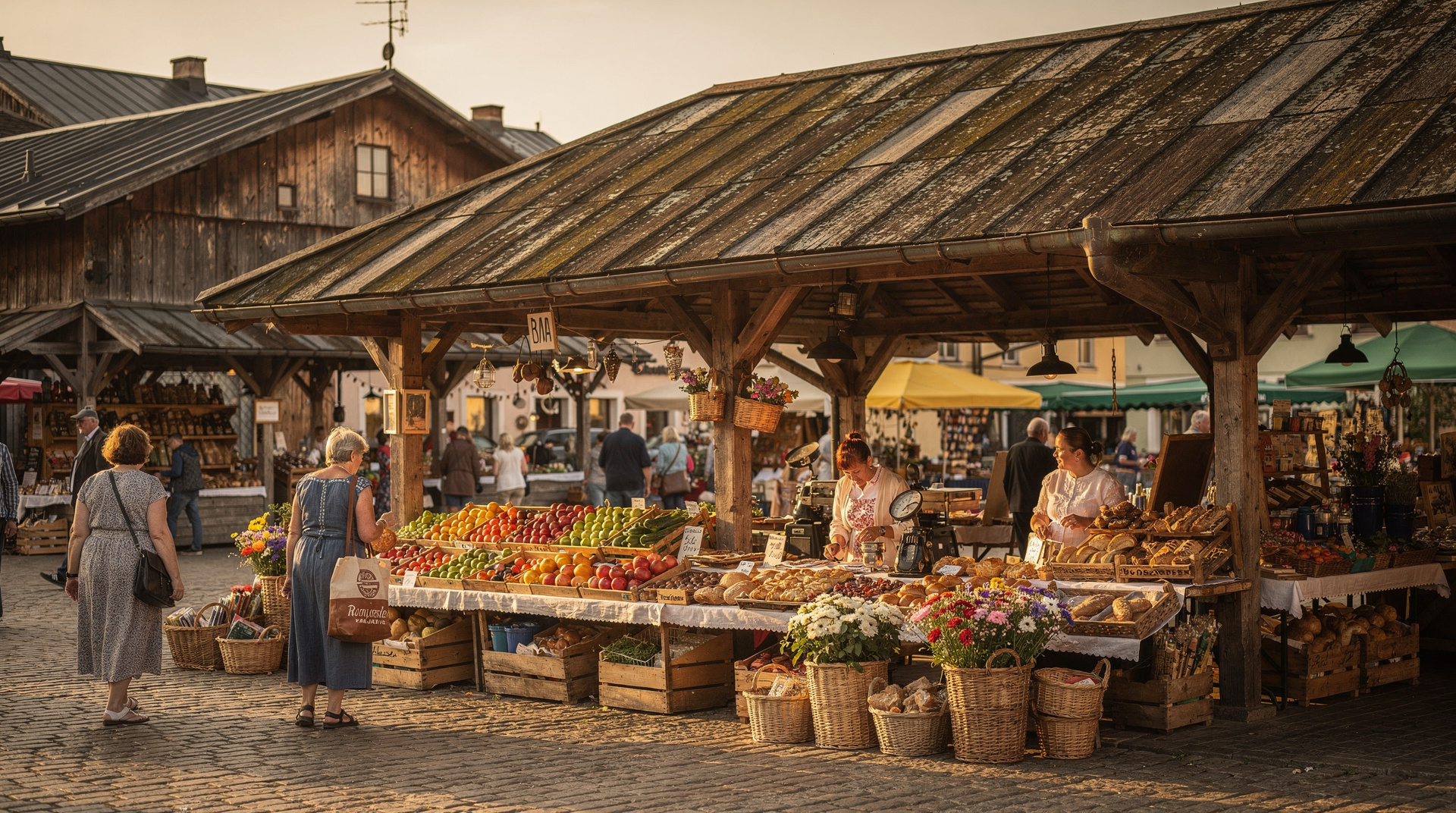
Central Market dairy pavilion — the highest concentration of quality rye bread vendors in Riga. Several bakers sell directly from their farms or small bakeries. Look for dense, dark loaves with a tight crumb; ask to taste before buying if the vendor offers it. A good loaf costs €2–4.
Lido cafeterias — serve a reliable version of rupjmaize alongside the food. Not the most artisanal, but consistent and appropriate for the traditional food context.
Artisan bakeries on Miera iela — several small bakeries on and around Miera iela in the New Town produce high-quality artisan rye bread. More expensive (€4–6 per loaf) but worth it if you want the best.
Kalnciema iela market (Saturday) — artisan bakers from across Latvia sell at this Saturday market in Pārdaugava. The best rye bread available in Riga on Saturdays is typically here.
Join a Central Market food tour to find the best rye bread vendors (€43, 2 hours)Pīrāgi: the Latvian celebration pastry
Pīrāgi are small baked pastries — the shape varies between crescent, oval, or oblong — filled with a mixture of finely chopped smoked pork (speķis) or bacon and onions, baked until golden brown. They are a Latvian original, with no direct equivalent in other European food cultures.
Origins and cultural context
Pīrāgi appear in the earliest documentary records of Latvian cooking and are associated with celebration and hospitality. They are served at Jāņi (midsummer festival), Christmas, Easter, birthdays, and name days. The ability to make excellent pīrāgi is a point of domestic pride in Latvian families, and recipes are passed down through generations.
The word “pīrāgi” comes via Latvian from the Slavic word for filled pastry (pīrogs/pirogi), which reflects the mixed Baltic-Slavic cultural influences of the region. But the Latvian version with its specific smoked pork-and-onion filling and its enriched yeast dough has its own distinct character.
What makes a good pīrāgis
The dough should be tender and slightly enriched (typically with egg and a small amount of fat) — not too heavy, not too sweet. The filling should be generously portioned and well-seasoned, with the smoked pork providing a savoury depth that simple bacon does not. The baking should produce a golden-brown crust with a slightly shiny egg-wash finish.
Poor versions (common in tourist bakeries) have too little filling, dough that is either too heavy or too sweet, and filling that is under-seasoned. The difference between a good and a bad pīrāgis is immediately apparent.
Where to find them
Central Market — vendors in the market produce fresh pīrāgi in the morning. Look for the baked-goods vendors toward the dairy pavilion end. Buying them warm is the ideal experience.
Lido cafeterias — serve pīrāgi consistently. Not the most artisanal but reliably decent and cheap (€0.80–1.20 each).
Folkklubs Ala — a good restaurant version, served warm as a snack with the beer or as part of a traditional food platter.
Cooking classes — making pīrāgi is a component of several Latvian cooking classes in Riga. See our cooking classes overview.
Pelmeni: the honest cultural context
Pelmeni are boiled dumplings — a thin pasta dough envelope filled with seasoned minced meat (typically pork, beef, or a combination), served hot with sour cream, butter, or vinegar. They are ubiquitous in Riga, sold at every level of the food market from the legendary Pelmeni XL canteen on Kalēju iela to upscale restaurants with artisan versions.
The honest origin question
Pelmeni are not Latvian in origin. They are Siberian in origin — the food of the peoples of Western Siberia, diffused westward through Russia and across the Soviet Union during the 20th century. They became a staple of the Soviet diet precisely because they could be made in large batches, frozen, and served quickly — ideal for a Soviet industrial food system. They became common in Latvia during the Soviet occupation and have been genuinely adopted by Latvian food culture since then.
This is not a reason not to eat them in Riga. Pelmeni at Pelmeni XL (Kalēju iela 7, Old Town) — a Soviet-era canteen that has been serving dumplings for decades — is one of the most authentic eating experiences in Old Town, costs €3–5 for a substantial plate, and is genuinely popular with local residents. It is just not Latvian in the same sense that pīrāgi are.
In cooking classes and food tour contexts, this distinction sometimes matters. Classes offering “Latvian cooking” sometimes include pelmeni alongside genuinely Latvian dishes. This is worth being aware of; see our cooking classes overview for a direct discussion of this question.
Join the Flavours of Riga food tour covering traditional food culture (€48, 3 hours)Pelmeni XL: the honest Old Town canteen
Pelmeni XL on Kalēju iela 7 in Old Town is worth a specific mention because it is one of the most genuinely local eating experiences in the tourist centre of Riga. The format is Soviet-era canteen: you queue at a counter, choose your dumpling type and size, pay (cash only, €3–5 for a plate), and eat at basic formica tables. No ambience in the Instagram sense; complete authenticity in the Riga-as-it-actually-is sense.
The pelmeni are consistently good: properly made dough, well-seasoned filling, served hot. The sour cream on the side is mandatory. The queue is part of the experience and never very long.
For a broader overview of food options in Riga, see our best Latvian foods guide and our guide to restaurants where locals eat.
Rye bread: the deep context
Rye bread is more central to Latvian food identity than any other single food. Understanding why requires a short detour into Baltic agricultural history.
Wheat does not grow well in Latvia’s climate and soil conditions — the growing season is too short and the soils too acidic for reliable wheat cultivation. Rye, by contrast, is well-adapted to exactly these conditions: it tolerates cold, poor soil, and short growing seasons. For the farming populations of Latvia through the centuries, rye was the staple grain, and rye bread was the staple food.
The sourdough fermentation tradition developed in parallel: sourdough-fermented rye bread keeps longer than yeasted bread, has a more complex flavour (the lactic acid fermentation produces organic acids that inhibit mould), and is more digestible than unfermented rye. The maintenance of a sourdough starter — passing it from mother to daughter as a household asset, managing its temperature and feeding schedule through the seasons — was a fundamental domestic skill in Latvian homes until the late Soviet period, when commercial bread production made home baking less common.
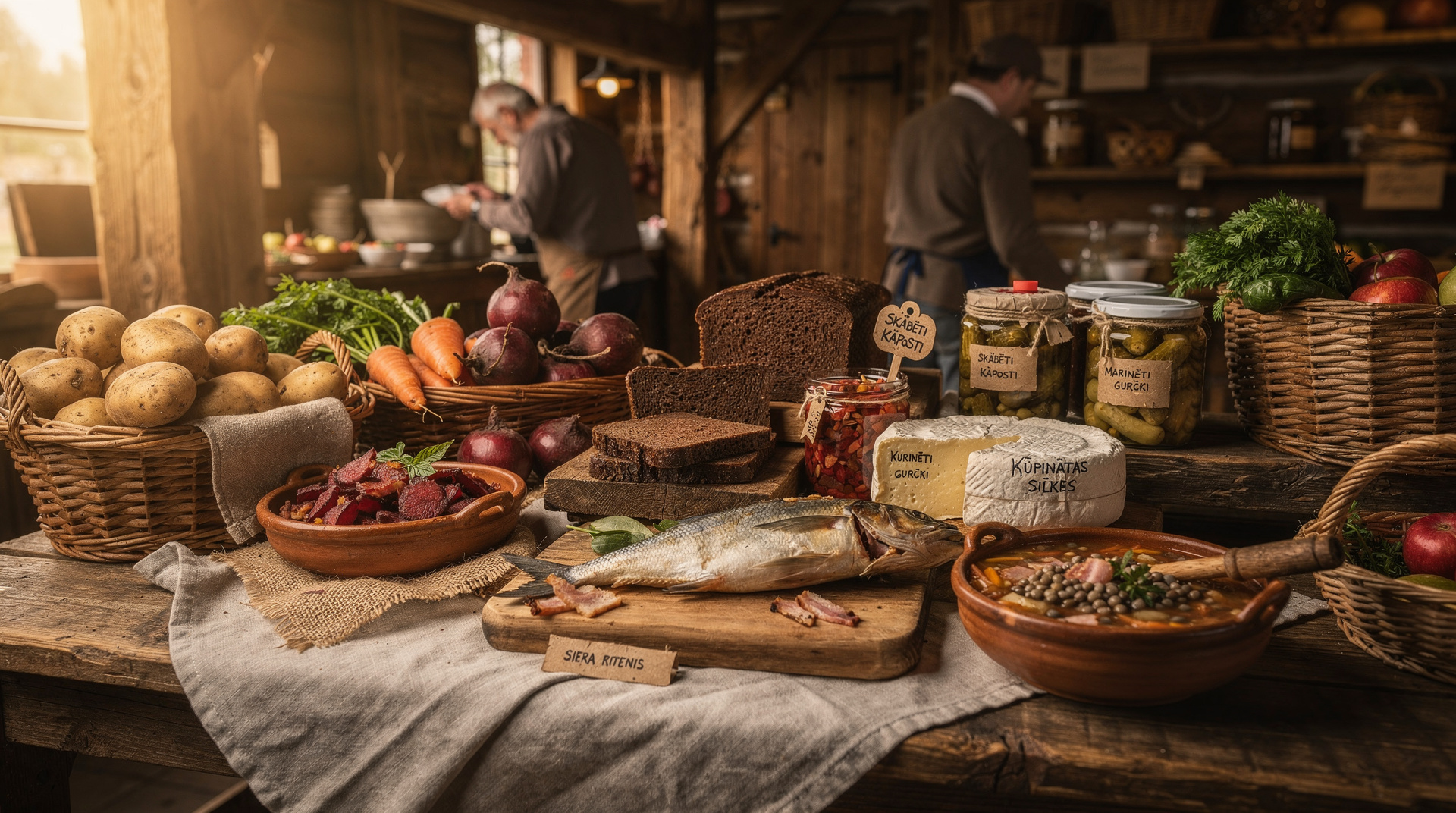
The traditional Latvian rye bread loaf (rudzu maize) is baked as a large round or oval with a dense, slightly sticky crumb, a hard crust, and a sour-sweet flavour from the long fermentation. It keeps for 5–7 days in a cloth wrapping. It is most commonly eaten as open-faced sandwiches (biezmaize) with butter, cottage cheese, smoked fish, or cold meat — the standard Latvian breakfast.
Kvass. From the same rye bread tradition comes kvass — a lightly fermented beverage made from stale rye bread soaked in water, fermented briefly, and strained. Kvass is mildly alcoholic (under 1% ABV), slightly sour, refreshing, and deeply Latvian in character. It is available from street kiosks in summer, from supermarkets year-round (in bottles or from tap dispensers), and occasionally at the Central Market. It is the most direct liquid expression of the rye bread fermentation tradition.
Pīrāgi: the Latvian party food
Pīrāgi are small pastry rolls — made from a yeasted dough enriched with butter and sour cream — filled with a mixture of smoked pork and onions, shaped (traditionally as small crescents or cylinders, though shapes vary), and baked until golden. They are the Latvian food that most directly represents the intersection of dairy (the enriched dough), pork (the smoked filling), and baking (the technique) that characterises traditional Latvian cooking.
The context. Pīrāgi are associated specifically with celebration and gathering in Latvian tradition — they were made for name days (vārdadienas, which in Latvia are as significant as birthdays), for family gatherings, for the Jāņi midsummer festival, and for Christmas. The association between pīrāgi and celebration is so strong that saying someone has come to a house “full of pīrāgi” is a Latvian expression for a festive reception.
This celebratory context shapes how they are best experienced in Riga. A pīrāgis eaten from a bakery counter is good; the same pīrāgis eaten in the context of a cooking class where you made them yourself, understanding the effort of the dough and the preparation of the smoked filling, is a different and richer experience.
Commercial versus artisan. The pīrāgi available in Latvian supermarkets and at some Central Market stalls are commercially produced — cheaper, more uniform, made without the butter-enriched dough of the home tradition. They are perfectly good; they are not the best version. The best pīrāgi in Riga come from bakeries that still make them with proper enriched dough: Lido (consistently) and several Central Market bakery vendors (variable but often excellent) are the best reliable sources.
The filling variations. The standard filling is smoked pork and onion. Variations exist — cabbage and bacon for vegetarian-adjacent versions, sweet poppy seed filling (magoņu pīrādziņi) as a dessert form, fresh fish pīrāgi in coastal communities. The smoked pork and onion version is the canonical form that defines the category.
Understanding Latvian food through these three foods
Rye bread, pelmeni, and pīrāgi together illustrate the three main threads of Latvian food culture:
The indigenous agricultural tradition (rye bread and pīrāgi) reflects the specific growing conditions of Latvia and the food practices that developed around rye as the staple grain. Sourdough fermentation, dairy enrichment, pork preservation through smoking — these are practices that make sense in a cold northern climate with specific agricultural constraints. They are distinctively Latvian in that they arise from Latvian conditions.
The imported Soviet food culture (pelmeni) reflects the 50-year demographic and cultural intervention of Soviet occupation, which introduced Russian and Siberian food traditions to Latvia through mass migration and the standardisation of the Soviet food supply. Pelmeni are genuinely eaten in Latvia today and are genuinely part of contemporary Latvian food culture; their origin in Siberian food tradition does not make them inauthentic as Latvian food now, but it does distinguish them from the pre-Soviet indigenous tradition.
The ongoing contemporary development includes both the adoption of international food culture (coffee culture, global restaurant styles) and the revival and refinement of traditional Latvian food by a new generation of chefs and food producers who are combining the indigenous tradition with contemporary culinary technique.
Understanding which category a dish belongs to helps visitors ask better questions in cooking classes, make better choices at the Central Market, and get more from food tours that discuss Latvian food history.
Where to taste each food properly
Rye bread. Buy a small loaf at the Central Market dairy or bread pavilion (€1.50–2.50). Eat a slice with Latvian butter and smoked fish from the adjacent pavilion. This is the most direct rye bread experience available in Riga.
Pīrāgi. Lido, Folkklubs Ala, and the Central Market bread stalls all sell good pīrāgi. For the best version — and the most satisfying eating experience — make them in a cooking class and eat them fresh from the oven.
Pelmeni. Pelmeni XL on Kalēju iela 7 in Old Town. Cash only. Queue expected. The pelmeni are made fresh and served hot with sour cream. €3–5 for a substantial plate.
Kvass. Buy a bottle at any Latvian supermarket (€0.50–1.50 per litre). Or look for a kvass kiosk near the Central Market in summer.
Frequently asked questions
Is Latvian rye bread gluten-free?
No. Rye contains gluten (a different gluten fraction than wheat, but still gluten). Latvian rye bread is entirely unsuitable for people with coeliac disease. Gluten-free alternatives are available in supermarkets and some cafes, but traditional rye bread cannot be made gluten-free.
Why does Latvian rye bread taste so different from the rye bread I know?
The key difference is the fermentation method (sourdough rather than commercial yeast) and the proportion of rye flour (very high — often 100% rye). Commercial rye breads outside Latvia are often a mix of wheat and rye flour with commercial yeast, producing a milder, lighter loaf. Traditional Latvian rye is 100% rye with sourdough fermentation — the result is denser, more sour, and more complex.
Can I take Latvian rye bread home on a plane?
Yes. A well-baked sourdough rye bread wrapped in a cloth or paper bag keeps for 5–7 days. It is not a liquid and has no restrictions for air travel. It is the best food souvenir from Riga and makes a better impression on food-interested friends than chocolate or trinkets.
Frequently asked questions
Is dark rye bread really that different from Western rye bread?
Yes, significantly. Latvian rupjmaize is typically 100% rye flour with a sourdough starter, producing a very dense, tightly-crumbed loaf with a pronounced sour flavour and firm dark crust. Most 'rye' bread sold in Western supermarkets is partly wheat, much lighter, and has a mild flavour by comparison. The Latvian version is closer in character to German Pumpernickel but with its own distinct flavour profile.Are pelmeni Latvian?
Pelmeni (a type of boiled dumpling) are not originally Latvian — they are Siberian-Russian in origin and spread throughout the Soviet Union. They became common in Latvia during the Soviet occupation and are now genuinely popular and widely eaten. But they are not part of the pre-war Latvian culinary tradition in the way that pīrāgi and rye bread are. Pīrāgi are the genuinely Latvian pastry.Where is the best place to eat pīrāgi in Riga?
The Central Market has vendors selling freshly baked pīrāgi on weekday mornings. Lido cafeterias serve them consistently throughout the day. Folkklubs Ala makes a decent version as part of their traditional food menu. For home-quality pīrāgi, the cooking classes that include them as part of the curriculum are worth considering.What is the difference between pīrāgi and pelmeni?
Pīrāgi are baked pastries — enriched yeast dough filled with a mixture of finely chopped smoked pork/bacon and onions. Pelmeni are boiled dumplings — unleavened pasta dough filled with meat (usually pork, beef, or a mix), similar in form to Italian ravioli or Chinese jiaozi but in the Eastern European tradition. Both are filled dough products but the dough, cooking method, and filling are completely different.
Top experiences
Bookable activities with verified prices and instant confirmation on GetYourGuide.