2 days in Riga: the best-of itinerary for couples
Riga: guided Old Town walking tour
Duration: 2 hours
- Free cancellation
- Small group
- English guide
Why 2 days is the sweet spot for Riga
A weekend in Riga — two full days — is the format where the city really delivers. You have enough time to slow down in the Old Town rather than rushing it, explore the Art Nouveau district properly, visit the Central Market (one of Europe’s great food markets), and do a canal cruise without feeling like you are ticking boxes. You can also fit in a decent dinner each evening without counting the hours.
Riga is genuinely one of Europe’s most underrated weekend destinations for couples. It is compact enough to navigate without a car, cheap enough compared to Tallinn or Stockholm that you can eat and drink well without blowing your budget, and different enough from Western European cities to feel genuinely new. The Art Nouveau district alone justifies the trip.
Total estimated budget for 2 people, 2 nights: €400–550 (mid-range hotel, restaurants, tours, transport). Budget for backpackers: €220–280. See the breakdown below.
At a glance
- Day 1: Airport arrival, Old Town deep dive, guided walk, evening boat cruise and dinner
- Day 2: Art Nouveau district, Quiet Center, Central Market food tour, canal-side afternoon
Budget breakdown (real EUR, per person)
| Item | Cost |
|---|---|
| Hotel (mid-range, 2 nights) | €90–130/night × 2 = €180–260 |
| Airport bus 22 × 2 (return) | €3 |
| Guided Old Town walking tour | €22 |
| House of the Blackheads ticket | €7 |
| Art Nouveau tour | €22 |
| Central Market food tour | €43 |
| Canal cruise | €18 |
| Meals (€30–45/day) | €60–90 |
| Coffee, drinks, snacks | €20–30 |
| TOTAL per person | €375–493 |
USD equivalent: approx $410–$540. GBP equivalent: approx £320–£425.
Day 1: Old Town immersion
Morning (9:00–12:30)
9:00 — Arrive and settle in. If you flew into RIX, take bus 22 to the city centre (€1.50, 30 min). Check into your hotel — most mid-range options in the Old Town have 14:00 check-in, so drop your bags and go. Spend 10 minutes at the nearest café: Innocent café on Audēju iela (flat white €3.50) is a reliable first stop.
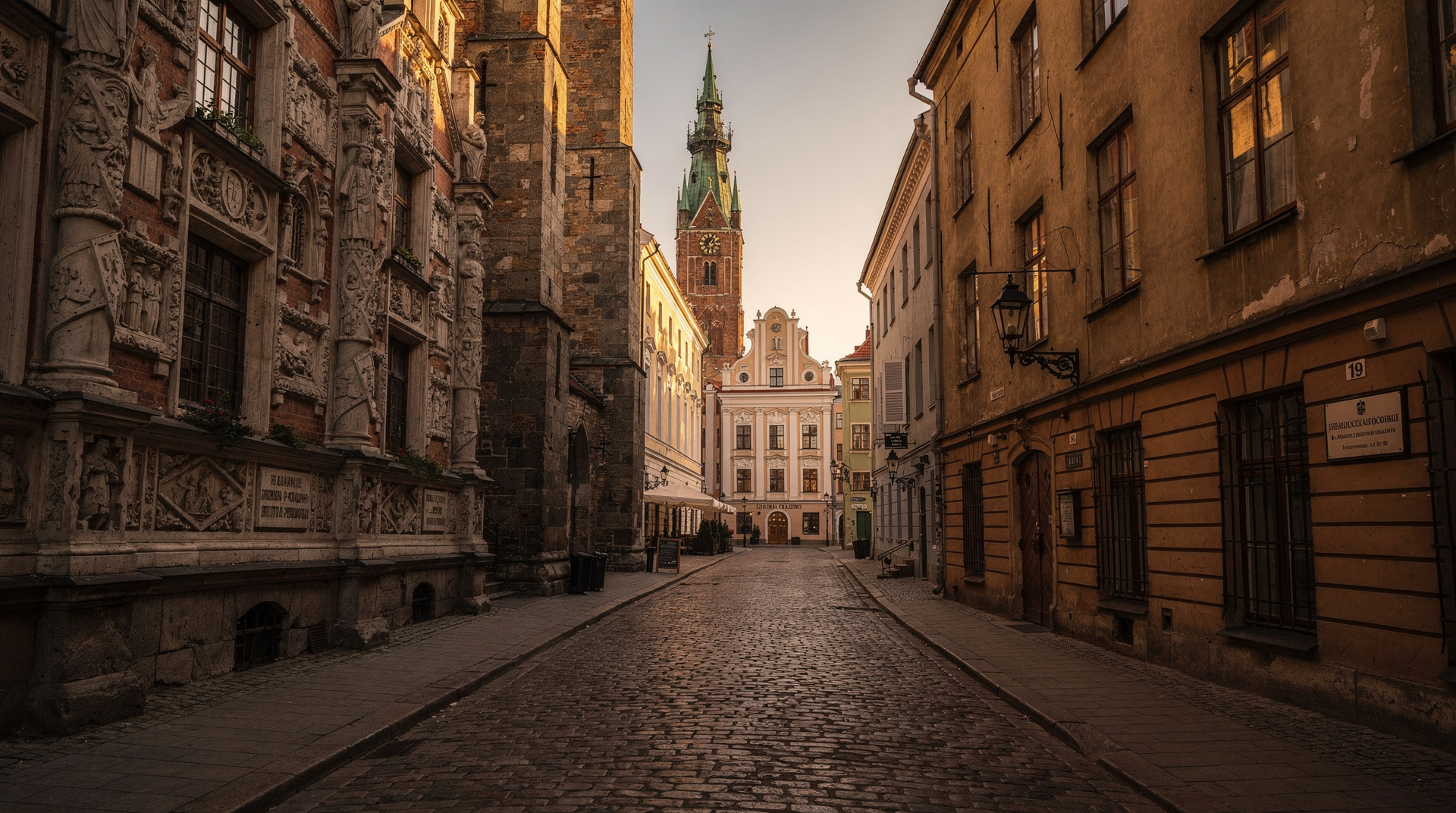
9:30 — House of the Blackheads and Town Hall Square. Begin at Town Hall Square (Rātslaukums). Buy your House of the Blackheads entrance ticket in advance (€7) — morning queues in summer can be 20–30 minutes without pre-booking. The reconstructed Guild House is the most photogenic building in Riga; inside, the exhibitions on the Blackheads brotherhood and Riga’s Hanseatic history are genuinely interesting.
10:30 — Old Town walking tour. Join the guided Old Town walking tour (€22 per person, 2 hours). Tours run at 10:00 and 12:00 from Town Hall Square. The guide covers the Dome Cathedral, Three Brothers medieval houses, Cat House, Swedish Gate, St. Peter’s Church, and Freedom Monument — with the context that makes these things meaningful rather than just photogenic. Small groups, knowledgeable guides who give honest takes on the city’s history including the Soviet period.
12:30 — St. Peter’s Church viewing platform. Finish the walk at St. Peter’s Church (Sv. Pētera baznīca) and take the lift to the viewing platform at 72 metres (€9). The panoramic view over the Old Town, the Daugava River, and the Art Nouveau district to the north gives you a mental map of everything you are about to see.
Lunch (13:00–14:00)
13:00 — Lunch at Bergs Bazaar. Walk to Bergs Bazaar (Marijas iela 13, 10 minutes from the Old Town). This 19th-century trading arcade has been converted into a cluster of independent restaurants and shops. Burgundijas Māja does outstanding Latvian-French fusion at €16–22 for a main. The courtyard is particularly pleasant in warm weather. Skip anything on Town Hall Square or Cathedral Square — prices are 30–50% higher for noticeably worse food.
Afternoon (14:30–18:00)
14:30 — Three Brothers and Dome Cathedral interior. After lunch, revisit anything you rushed through on the morning walk. The Three Brothers (Trīs brāļi) on Maza Pils iela are the three oldest surviving residential buildings in Riga (15th–17th century) — free to look at from outside, with the Museum of Architecture occupying the buildings. Dome Cathedral interior (€3 entry when no concert) has the fourth-largest organ in the world and remarkable medieval floor tiles. If you missed the organ concert in the morning, check the afternoon schedule.
16:00 — Canal and Daugava cruise. Walk to the canal pier near Bastejkalns park (5 minutes from the Old Town). The historic wooden boat canal and Daugava cruise (€18 per person, 1 hour) is excellent for seeing the city from the water. The route goes through the city canal, past the National Opera House and Bastejkalns, then out onto the Daugava River for a view of the Riga skyline and the Old Town from the water. Boats depart every 30 minutes May–October.
17:15 — Stroll through the park. The canal-side parks (Bastejkalns, Vērmanes dārzs) are where locals spend summer evenings. The area between the canal and the Old Town has several good café terraces.
Evening (18:30–22:00)
18:30 — Black Balsam at Riga Black Magic Bar. Riga Black Magic Bar (Meistaru iela 9, inside a Gothic cellar) is the atmospheric way to try Riga Black Balsam — a shot (€4) or a cocktail mixed with cherry juice (€8). Touristy? Yes. Worth doing once? Also yes. The bar itself is all black stone and candlelight and genuinely fun for a first evening.
19:30 — Dinner. Folkklubs Ala Pagrabs (Peldu iela 19) is the most enjoyable traditional Latvian restaurant in the city — folk music, communal tables, pelmeni (hand-made dumplings), pīrāgi (bacon rolls), local beer from €4 a glass. Mains €11–18. Not fancy, very good. Book ahead for weekends or arrive before 19:00. For something more refined, Bibliotēka No1 (Tērbatas iela 2) does modern Latvian cuisine at €20–30 for mains — reservation required.
21:00 — Evening walk through the lit Old Town. The Old Town at night is one of the best free things in Riga. The House of the Blackheads, the Dome Cathedral, and the narrow cobbled alleys are beautifully lit. A short walk after dinner costs nothing and looks excellent.
Day 2: Art Nouveau, Quiet Center, Central Market
Morning (9:00–13:00)
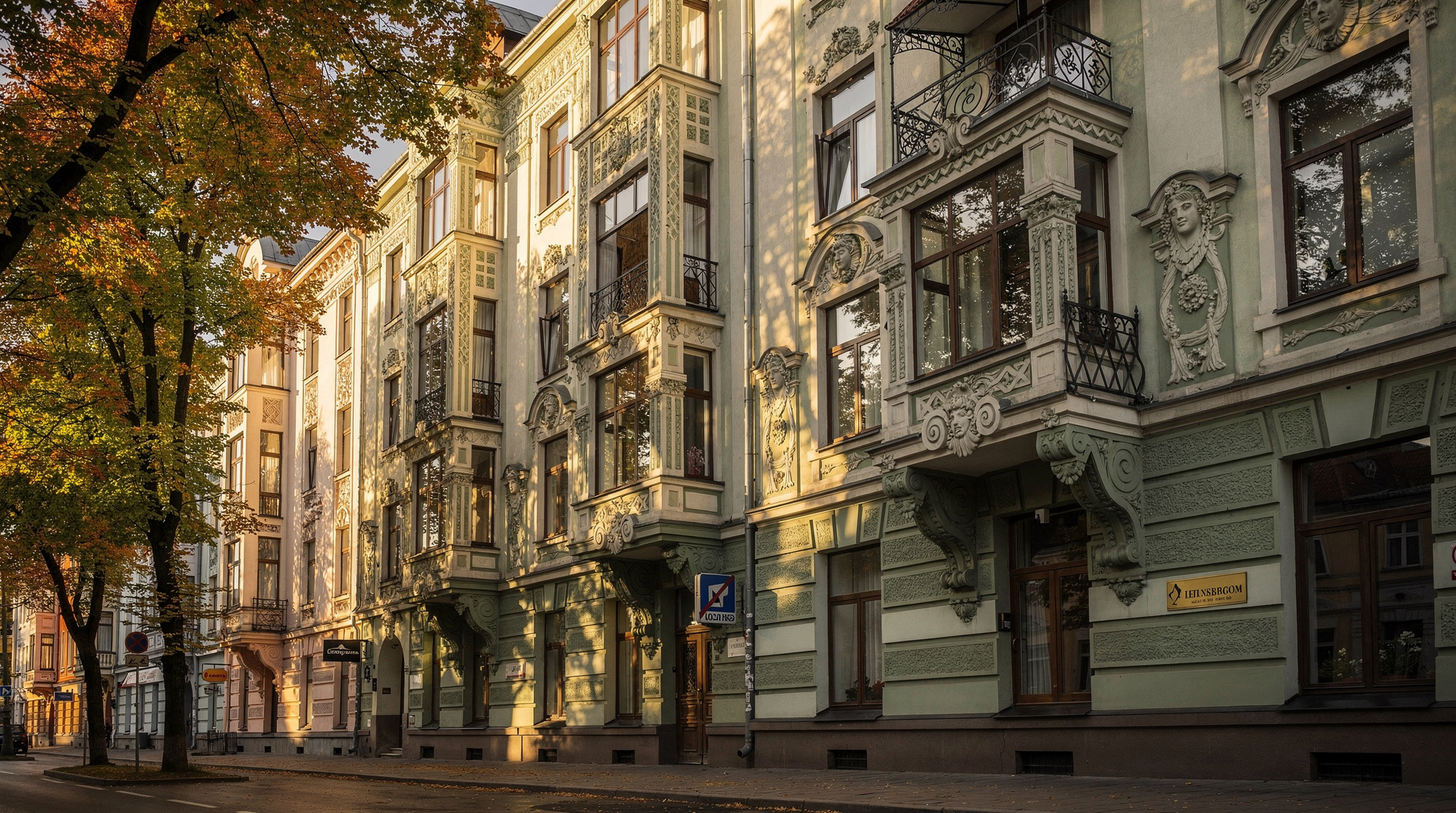
9:00 — Art Nouveau walking tour. The second day belongs to the Art Nouveau district, and it deserves a guide. The Art Nouveau history walking tour (€22 per person, 2 hours) starts at Alberta iela and covers the most remarkable facades in the world’s most concentrated Art Nouveau city. Meeting point is typically at the start of Alberta iela (reachable by tram 11 from the Old Town, 10 minutes).
The guide explains the three phases of Riga’s Art Nouveau — Eclectic, Perpendicular, and National Romantic — and why Mikhail Eisenstein’s buildings on Alberta iela are so astonishing. You will understand what you are looking at, rather than just photographing facades.
11:15 — Art Nouveau Museum (Alberta iela 12). After the tour, visit the Art Nouveau Museum (€8 entry, closed Monday) at Alberta iela 12 — a completely preserved apartment from 1903 with original furniture, wallpaper, and interiors. 45 minutes is enough. It gives you the interior to match the exteriors you have just seen.
12:00 — Walk through the Quiet Center. Continue south through the embassy quarter — Raiņa bulvāris, Elizabetes iela — admiring the mix of Art Nouveau, Historicism, and wooden residential architecture. The Quiet Center (Klusais centrs) is where Riga’s upper class lived before 1914, and the scale and quality of the buildings still reflects that. This is a free, 30-minute walk.
Lunch (13:00–14:00)
13:00 — Lunch at Miera iela or Tērbatas iela. Miera iela (about 15 minutes from Alberta iela) is Riga’s most interesting street for lunch: independent cafés, natural wine bars, and food spots used by locals rather than tourists. Croissant-Lab is excellent for a light lunch (€8–12). Istaba (Brīvības iela 31) does excellent light lunches (€12–18, local art on walls). Both are a clear step up from the Old Town tourist circuit.
Afternoon (14:00–17:30)
14:00 — Central Market food tour. Walk or take tram 7 to the Central Market (Centrāltirgus) — 20 minutes from Miera iela. The Central Market traditional food tour (€43 per person, 2 hours) runs daily and includes tastings of local produce — smoked fish, grey peas with bacon, Latvian dairy, rye bread, and seasonal pickles. The five pavilions (former Zeppelin hangars from WWI) house one of Europe’s largest and most visually extraordinary indoor markets. The food tour gives you the context and the best stalls; going alone first and returning on the tour is the optimal approach.
16:00 — Maskavas Forštate stroll. The neighbourhood behind the Central Market — Maskavas Forštate — is the unpretentious, pre-gentrification part of Riga that most tourists never see. Wooden Art Nouveau buildings, Soviet-era apartment blocks, and excellent coffee at Float (Maskavas iela 14). A 30-minute walk through here gives you a completely different picture of the city.
17:00 — Sunset at the Academy of Sciences viewpoint. The Panorama Riga observation deck at the Academy of Sciences (“Stalin’s Birthday Cake”) gives the best wide view over the city and the Daugava River at golden hour. Ticket €8 via Panorama Riga observation deck ticket. Open until 21:00 in summer.
Evening (18:30–22:00)
18:30 — Aperitivo hour. The canal-side bars around Kronvalda bulvāris do decent aperitivo-style drinks (€6–9) from 18:00. Or go to Aptieka bar (Jauniela 3, Old Town) for well-made cocktails (€10–13).
19:30 — Dinner. Vairāk Saules (“More Sun,” Dzirnavu iela 60) is one of the best restaurants in Riga — Latvian produce, creative menu, mains €18–28, outdoor terrace in summer. Reservations essential on weekends. Budget alternative: the Indian restaurant Tandoor (Grēcinieku iela 12) does excellent value at €12–18 for mains and is reliably good — a surprising find two minutes from the Old Town.
21:00 — Nightcap and depart. The Old Town has dozens of bars. Gauja Bar (Jāņa sēta) is excellent for Latvian craft beer (€5–7 per pint). Or buy a beer from a kiosk and sit by the canal — genuinely pleasant, very cheap.
How to extend to 3+ days
Day 3 can add Jūrmala (Baltic sea resort, 20 minutes by train), a deeper Soviet history tour of Riga, or a day trip to Sigulda. See our 3-day Riga classic itinerary and 3-day itinerary with Jūrmala.
Where to stay
Budget (€50–80 double): Tree House Riga (Old Town, clean, very central, doubles from €60). Naughty Squirrel Backpackers also has private rooms (from €55).
Mid-range (€90–150 double): Wellton Old Riga Palace (Old Town, doubles from €100, great location). Pullman Riga Old Town (doubles from €130, central, modern rooms, good bar).
Luxury (€180+ double): Grand Hotel Kempinski Riga (Old Town, doubles from €250, best service in city). Hotel Rome (Kalķu iela, from €180, boutique, excellent restaurant).
Honest tips for this 2-day itinerary
- Do the Art Nouveau tour on day 2, not day 1. You need the Old Town walk first to understand the city’s history; the Art Nouveau district makes more sense with that context.
- Book the Central Market food tour in advance. It sells out on weekends in summer, and walk-on places are not always available.
- The Quiet Center is free and underrated. Most visitors stay in the Old Town the whole time and miss the most architecturally dense neighbourhood in the Baltics.
- Eat lunch away from the Old Town. Miera iela and Tērbatas iela have Riga’s best lunch options at non-tourist prices.
- The canal cruise is timed well in the late afternoon. Afternoon light on the water is better for photos than midday.
- Check restaurant opening hours on Sunday. Some Riga restaurants are closed Sunday evening, or close early. Folkklubs Ala is open every day.
- The Central Market is best on weekday mornings. Saturday mornings are crowded; Sunday afternoons the stalls start to close early.
Frequently asked questions about a 2-day Riga itinerary
Is 2 days enough to see Riga?
Two full days covers the Old Town, Art Nouveau district, Central Market, and a canal cruise comfortably. You will not have time for day trips to Sigulda or Jūrmala, but you will see everything in the city itself that matters. Three days is the minimum to add a day trip.
What is the best neighbourhood to stay in Riga for 2 days?
The Old Town (Vecrīga) puts you within walking distance of everything, but it is the noisiest area on weekend nights. The quiet end of the New Town (near Elizabetes iela or Brīvības bulvāris) is 10 minutes from both the Old Town and the Art Nouveau district, and noticeably quieter.
How much cash do I need in Riga?
Very little. Card payment is accepted in essentially all restaurants, bars, shops, and taxis. The exceptions are the Central Market’s smallest stalls, public toilets (€0.20–0.50 coin), and street food kiosks. Keep €10–20 in cash as backup but you can complete this itinerary without using it.
Can I do this itinerary in winter?
Yes, with modifications. The canal cruise operates May–October only; replace it with the Museum of the Occupation (free, excellent), the Latvian National Museum of Art (€6), or the Dome Cathedral interior. Winter mornings are dark until 09:00 in December, so start at 10:00 and compress the outdoor time. Prices for hotels are 20–40% lower than summer.
Are guided tours worth it in Riga?
For the Old Town and Art Nouveau district, yes. The context matters: walking through buildings you do not understand is less rewarding than understanding why Riga became the wealthiest city in the Russian Empire and why it responded with such extraordinary architecture. Good guides explain the Hanseatic League, the Latvian National Awakening, and the Soviet period in ways that make every building coherent.
Is Riga a good romantic destination?
One of the best in the Baltics. The cobbled Old Town, the canal-side parks, rooftop views from St. Peter’s Church, the boat cruise at sunset — Riga has the physical setting for a very good romantic weekend. Hotels like the Kempinski and the boutique options on Kalku iela cater specifically to couples. See also our romantic weekend in Riga itinerary.
Riga on foot — understanding the city’s layout
One of the things that makes Riga work well for a 2-day itinerary is the way the main areas of interest are arranged in a logical walking sequence. Understanding the geography before you arrive helps.
The Old Town (Vecrīga) sits on a curve of the Daugava River on the east bank. It is compact — roughly 800 metres from south to north, 500 metres from the river to the canal — and almost entirely pedestrianised. Everything in the Old Town is within a 15-minute walk of everything else.
The canal (pilsētas kanāls) forms the eastern and northern border of the Old Town — a ring canal that follows the line of the former city walls, demolished in the 1850s and replaced with linear parks. The canal parks (Bastejkalns, the Esplanade, Vērmanes dārzs) form a green ring around the Old Town and connect it to the New Town.
The New Town (Jaunā Rīga) begins at the canal’s outer edge and extends north and east. This is where the Art Nouveau district lives — Alberta iela and Elizabetes iela are in the New Town, approximately 1.2 km from Town Hall Square.
The practical implication: On Day 1, you stay in and around the Old Town. On Day 2, you cross the canal (5-minute walk from any Old Town hotel) into the New Town for the Art Nouveau district. The Central Market is 10 minutes south of the Old Town, beyond the bus/train station. Everything on this 2-day itinerary is reachable on foot without public transport — though trams are useful for saving 15–20 minutes on the Art Nouveau district leg.
Riga two days vs one day: what you gain
The second day in Riga is not more of the same — it is access to a completely different city. The Art Nouveau district and the Quiet Center embassy quarter on Day 2 have almost no overlap with the Old Town of Day 1. The Central Market, if you add it on the afternoon of Day 2, is a third distinct environment. By the end of two days you have seen three Rigas: medieval, Edwardian-Belle Époque, and Soviet/Soviet-survivor.
This is the argument for two days over one: Riga is not a one-trick city. The traveller who says “Riga in one day is enough” has only seen one-third of it.
Riga weekend planning calendar
Best weekends: May (chestnut blossoms, minimal crowds, canal cruise open), June before Jāņi (long days, warm weather), early September (warm without peak crowds, autumn on the horizon).
Avoid if possible: Jāņi weekend (June 23–24, National Midsummer holiday — the city is very busy, accommodation prices spike 50–100%). New Year’s Eve (similarly crowded and expensive). Major stag party events (check if there are large groups booked when searching for hotels — the Old Town can be unpleasant on specific Friday and Saturday nights; mid-week trips avoid this entirely).
Good off-season: Late October to early December has a pleasant low-season character — the city is nearly tourist-free, the Christmas market opens in late November on Town Hall Square, and hotel prices are significantly lower. The canal cruise does not operate, but the indoor alternatives (Occupation Museum, Art Nouveau Museum, organ concerts at the Dome Cathedral) are all available.
Further reading
- Riga 3-day classic itinerary
- Old Town walking route (self-guided)
- Art Nouveau district guide
- Where locals eat in Riga
- Riga money, budget and real prices
Top experiences
Bookable activities with verified prices and instant confirmation on GetYourGuide.
Riga: guided Old Town walking tour
- Free cancellation
- Small group
- English guide
Riga: 2-hour history of Art Nouveau walking tour
- Free cancellation
- Small group
Riga: canal and Daugava cruise on a historic wooden boat
- Free cancellation
- Best seller
Riga: Central Market traditional food tour in a small group
- Tastings included
- Small group