Riga Art Nouveau architecture: the complete guide
Riga: 2-hour history of Art Nouveau walking tour
Duration: 2 hours
- Free cancellation
- Small group
What makes Riga's Art Nouveau district so special?
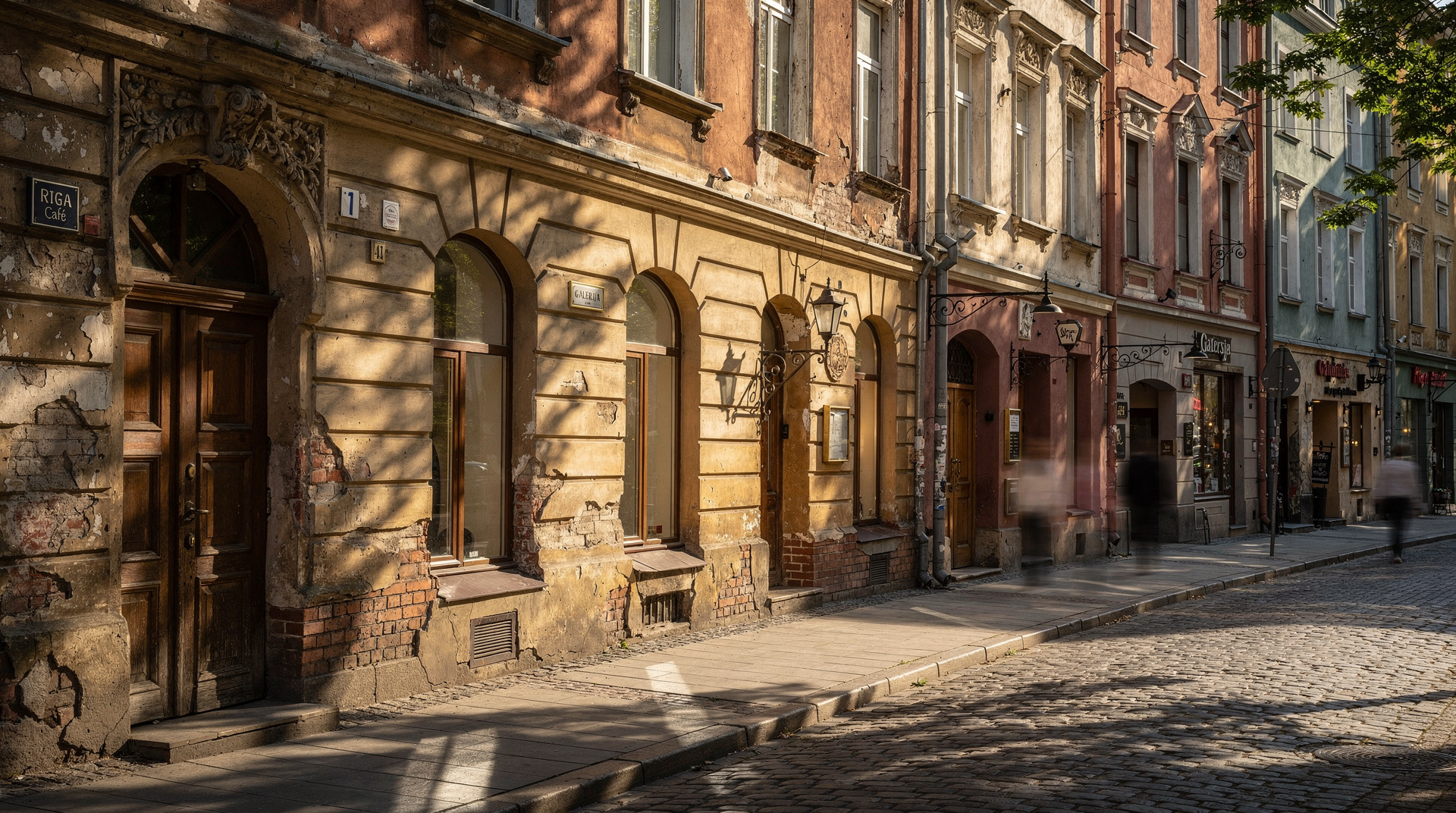
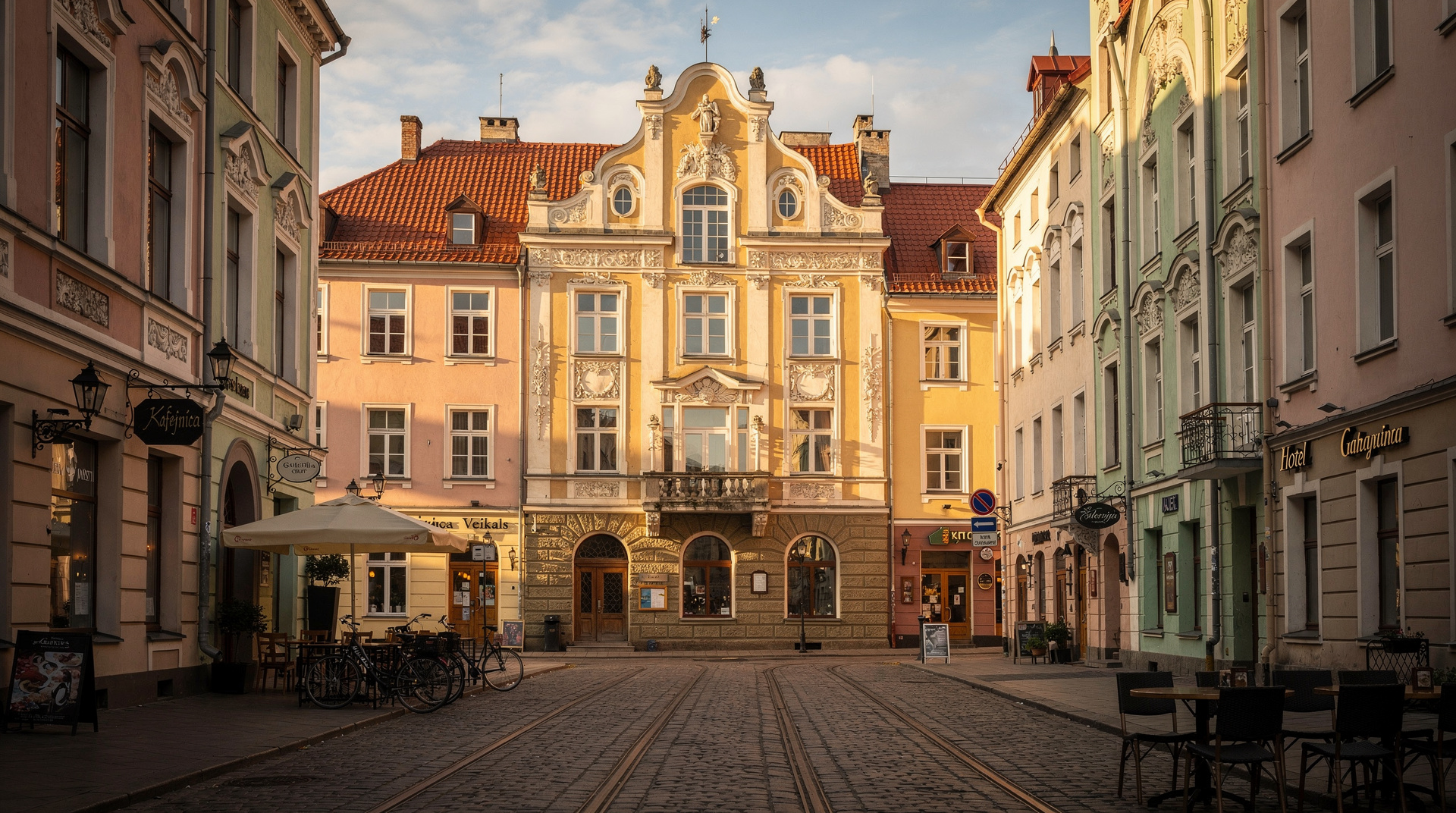
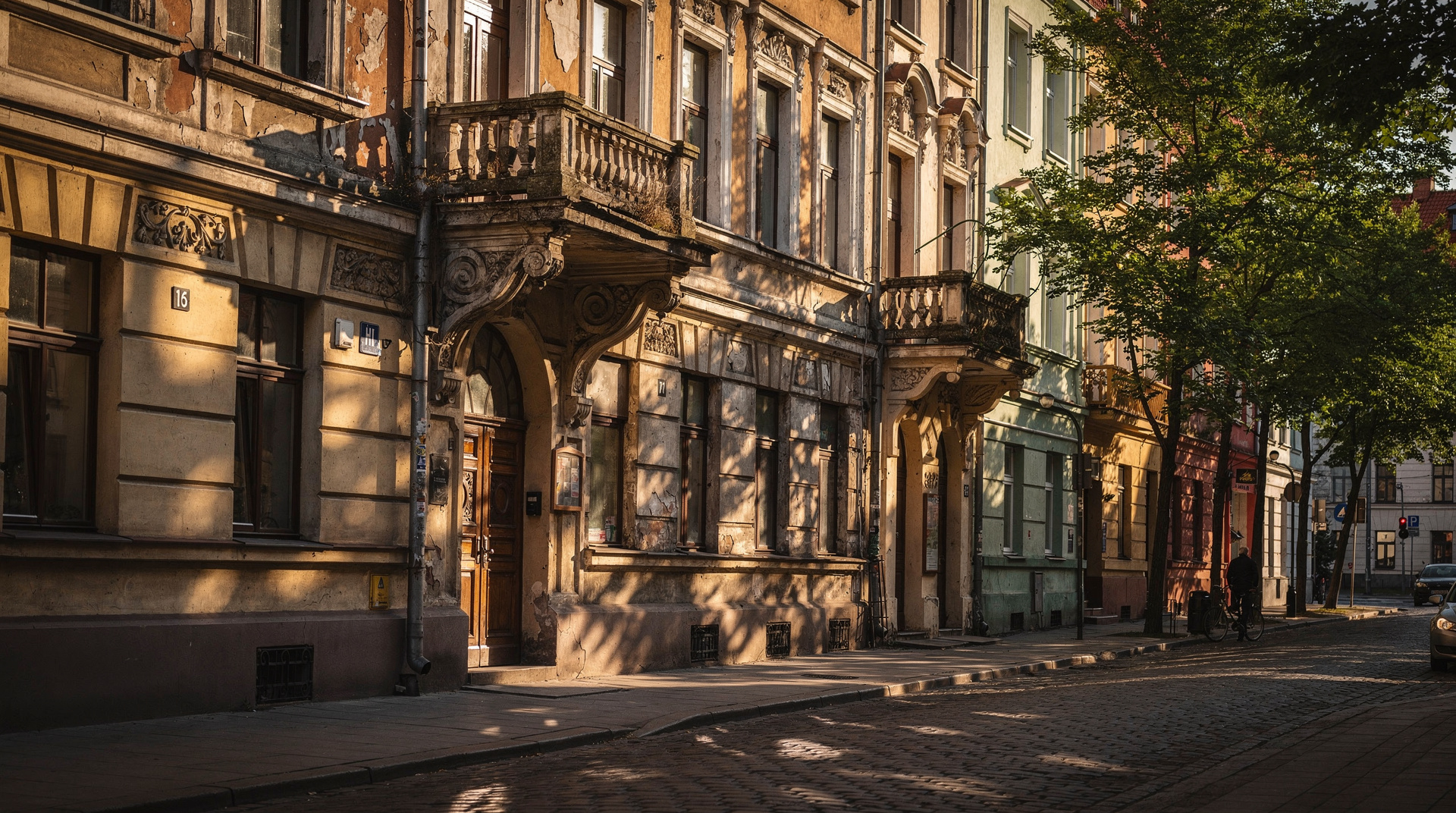
Riga has around 800 Art Nouveau buildings — more than any other city in Europe — concentrated in the Quiet Center district built between 1896 and 1913. Alberta iela and Elizabetes iela are the two streets every visitor should walk.
Why Riga is the Art Nouveau capital of Europe
When architects and urban historians talk about Art Nouveau, they often mention Paris, Brussels, or Barcelona. But the city with the greatest concentration of Art Nouveau buildings in the world is Riga. The count stands at around 800 buildings, representing roughly a third of all structures in the central districts — a figure that reflects one remarkable historical accident: Riga’s economic boom came at precisely the right moment.
Between 1896 and 1913, Riga was the third-largest city in the Russian Empire and one of the fastest-growing industrial ports on the Baltic. Local manufacturers and merchants were rich, ambitious, and keen to demonstrate their modernity. Riga’s architects had trained in St. Petersburg, Vienna, and Berlin, and they returned with drawings full of organic ornament, screaming masks, intertwined female figures, and florid metalwork. The result was an urban building boom concentrated in the neighbourhood now known as the Quiet Center (Klusais centrs), directly north of the medieval Old Town across the canal park.
When the boom ended — first with World War I, then with Soviet occupation, then with economic stagnation — the buildings were preserved almost accidentally. There was no money to demolish and rebuild. What Riga ended up with, after 1991 and independence, was an intact early-20th-century neighbourhood on a scale no other European city can match.
The three styles you will see
Art Nouveau in Riga comes in three distinct flavours, and recognising them transforms the walk from architecture tourism into a genuine visual hunt.
Eclectic Art Nouveau (roughly 1896–1904) mixes classical elements — columns, pilasters, pediments — with the new organic decorative vocabulary. Façades are symmetrical but erupt at the cornices and entrance portals into floral reliefs, female masks, and twisted metalwork. Mikhail Eisenstein’s buildings on Alberta iela are the supreme examples of this period.
Perpendicular Art Nouveau (roughly 1904–1910) is more restrained and vertical. The ornament thins out, bay windows become dominant, and the overall feeling is closer to the Viennese Sezession movement. Many buildings on Elizabetes iela and Strēlnieku iela fall into this category.
National Romanticism (roughly 1906–1915) is a Latvian variant that drew on folk motifs, granite textures, and simplified forms rather than on floral ornament. It emerged partly as a reaction against the German-dominated eclectic style, with Latvian architects asserting a national identity through architecture. The Latvian Society of Riga building on Merkela iela is a key example.
Alberta iela: the essential street
No street in Europe packs Art Nouveau facades as tightly as Alberta iela (Alberta Street), a short residential street running eight blocks north from Elizabetes iela. Every building on this street repays slow attention.
Alberta iela 2 (1906, Mikhail Eisenstein) — arguably the most photographed facade in Riga. Three massive female mask keystones above the entrance arch, flanked by atlantes and wreathed in floral reliefs. The colour scheme (ochre and white) is original.
Alberta iela 4 (1904, Eisenstein) — screaming lion-head masks and a more restrained treatment of the cornice. Note the griffins at the roofline and the elaborate ironwork on the balconies.
Alberta iela 6 (1904, Eisenstein) — pale grey facade with deep bay windows and a central entrance crowned with a sphinx. The building is now home to several law firms.
Alberta iela 8 — the Art Nouveau Museum. This 1903 apartment, once home to the Riga court architect Friedrich Scheffel, has been preserved as a time-capsule of the period. Original furniture, curtains, tile stoves, and wallpaper. One of the best museum experiences in Riga for anyone interested in domestic life of the early 20th century.
Alberta iela 11 (1908, Konstantīns Pēkšēns) — a National Romanticism counterpoint to the Eisenstein buildings across the street. Rougher granite textures, simplified ornament, folklore motifs in the ceramic tiles.
Alberta iela 13 (1904, Eisenstein) — the most theatrical entrance on the street: two massive caryatid figures flanking the portal, a screaming Medusa head above, and a cascade of female masks at every storey.
Join the top-rated 2-hour Art Nouveau history walking tour (€22)Elizabetes iela and nearby streets
Elizabetes iela runs parallel to Alberta iela one block to the south and contains some of the best examples of Perpendicular Art Nouveau in the city. The street is busier with traffic than Alberta iela but the building quality is consistently high.
Elizabetes iela 10b (1903, Eisenstein) — the Corner building with five decorative bays and Eisenstein’s signature screaming heads at the cornices. The building wraps around the corner with Antonijas iela in a confident sweep.
Elizabetes iela 33 (1901, Laube) — one of the finest National Romanticism examples. Rough-hewn stone base, ceramic tile friezes with Latvian folk motifs, and a steeply pitched mansard roof.
Strēlnieku iela 4a (1905, Pēkšēns and Laube) — a perpendicular Art Nouveau masterpiece with a green ceramic tile frieze at the third floor and an almost skeletal treatment of the bay windows.
Pulkveža Brieža iela (formerly Nikolaja iela) connects Alberta and Elizabetes and passes several outstanding facades. The buildings at numbers 8 and 11 are particularly good for the transition from eclectic to perpendicular styles.
A suggested walking sequence
Start at the corner of Alberta iela and Elizabetes iela (a 15-minute walk from Old Town via the canal park, or a 5-minute Bolt ride). Walk the length of Alberta iela slowly, stopping at each facade. Cross to Elizabetes iela at the top and walk back south. Then cut through Strēlnieku iela before looping back via Pulkveža Brieža iela. This circuit covers the essential buildings in about 90 minutes at a relaxed pace — add 45–60 minutes if you go inside the Art Nouveau Museum.
For the full picture of Riga’s Art Nouveau beyond Alberta and Elizabetes, continue south along Brīvības iela to the intersection with Kr. Valdemāra iela. The buildings along this stretch show how Art Nouveau influenced commercial architecture — banks, offices, and mixed-use buildings from the same period.
Book the Art Nouveau highlights tour with museum visit (€32, includes entry)Honest tips for the Art Nouveau district
The facades are better in the morning. Alberta iela faces roughly west, so it gets direct light from around 14:00 in summer. But the morning light on Elizabetes iela (which faces east) is excellent from 07:00 to 10:00, with long shadows that emphasise the sculptural relief. Early birds get the best photographs and the emptiest pavements.
Free context before you go. The Latvian Museum of Architecture (in the Three Brothers complex in Old Town, Mazā Pils iela 19) has a permanent exhibition on the Art Nouveau period that is free and good. Spend 20 minutes there before walking to Alberta iela and the buildings will make more visual sense.
Guided tour versus self-guided: be honest with yourself. If you have a strong background in architectural history, the self-guided walk with a good printed guide (the tourist office on Town Hall Square sells them for €3–4) is entirely satisfying. If you don’t, a guided tour is not a luxury — it is the difference between seeing faces on walls and understanding what they mean and why they are there.
The museum interior matters. Photographs of Alberta iela facades are available online in abundance. What you cannot see online is the interior of the preserved apartment at no. 8 — the tile stoves, the oak parquet floors, the dining room set that looks like something out of a Vienna Secession exhibition catalogue. If you only have time for one interior in the Art Nouveau district, this is it.
Don’t neglect the street furniture. Riga’s Art Nouveau neighbourhood has retained an unusual amount of period metalwork: door handles, window grilles, mailbox surrounds, and staircase railings. These are often more interesting up close than the large-scale facade ornament that most visitors photograph. The building at Elizabetes iela 23 has one of the best preserved original entrance halls in the city — look for it.
Getting to the Art Nouveau district
From Riga Old Town (Town Hall Square), the walk north via the Bastion Hill canal park takes 15–18 minutes on foot and is genuinely pleasant. Cross the canal at the pedestrian bridge near the Natural History Museum, continue along Kr. Barona iela, then turn left on Elizabetes iela. Alberta iela is one block further north.
By Bolt from Old Town: 4–5 minutes, around €4–5. Ask the driver for Alberta iela or Elizabetes iela.
By tram: trams 6 and 11 connect Old Town with the Quiet Center. The stop at Kr. Barona iela / Elizabetes iela puts you one block from the Art Nouveau concentration.
Frequently asked questions about Riga Art Nouveau architecture
How many Art Nouveau buildings does Riga have?
Around 800 buildings in the Art Nouveau style, representing roughly one-third of all buildings in the central districts. UNESCO included Riga’s historic centre — including the Art Nouveau quarter — on the World Heritage List in 1997.
Where is the best street for Art Nouveau in Riga?
Alberta iela is the single best street: eight consecutive facades by Mikhail Eisenstein, all in the eclectic or perpendicular Art Nouveau style. Elizabetes iela and Strēlnieku iela are excellent supplements within a 10-minute walk.
Do I need a guided tour to appreciate the Art Nouveau buildings?
Not strictly, but a good guide transforms the experience significantly. The symbolism embedded in the facades — screaming masks, female figures, griffins, sphinxes — has specific meanings that you will walk past without context. A 2-hour guided tour adds roughly €18–32 to your budget and is worth it.
Is the Riga Art Nouveau Museum worth visiting?
Yes. The museum at Alberta iela 12 is a preserved apartment from 1903 with original furniture, wallpaper, and fittings. It takes about 45–60 minutes and costs €6. Combine it with the exterior walk on Alberta iela for the full picture.
When is the best time to photograph Riga’s Art Nouveau facades?
Early morning in summer (before 08:00) gives clean light and empty pavements. Overcast days are actually good for facade photography as they eliminate harsh shadows in the decorative details. Late afternoon in autumn gives warm golden light.
Can I see the Art Nouveau district on a budget?
The exterior walk is entirely free. Budget €6 for the museum interior, €22 for a guided walking tour if you want context, and €2–3 for a coffee on Elizabetes iela. A total of €30 covers a rich half-day in the district.
How far is the Art Nouveau district from Riga Old Town?
Alberta iela is about 1.2 km north of Town Hall Square — a 15-minute walk or a 5-minute Bolt ride. The canal park that separates Old Town from the New Town is a pleasant route to walk.
For a focused street-by-street route, see our Alberta and Elizabetes Street walking route. For a comparison of guided tour options, see best Art Nouveau walking tours compared. To plan your broader visit to Riga, start with our Riga 2-day itinerary.
Why Riga has so much Art Nouveau: the economic context
The concentration of Art Nouveau architecture in Riga is not an accident of taste — it is the result of a specific economic and demographic moment that converged on this city at the beginning of the twentieth century.
In 1900, Riga was the third-largest city in the Russian Empire after St. Petersburg and Moscow, and one of the most economically dynamic. It was the Empire’s primary port on the Baltic Sea, handling enormous volumes of trade. Industrial production — railway equipment, rubber goods, chemicals, textiles — was growing rapidly, producing a wealthy industrial bourgeoisie that wanted to signal its prosperity and modernity. The population was growing fast, requiring massive construction of apartment buildings. And the architectural profession had ready access, through Riga’s German cultural connections, to the latest European architectural currents — including the Jugendstil style that had emerged in Munich, Vienna, and Brussels in the 1890s.
The result was a building boom of unusual intensity and stylistic coherence. In roughly 15 years, from approximately 1898 to 1913, the New Town districts were built out almost entirely in Art Nouveau. There was no gradual transition, no protracted debate about which styles to use — the market demanded modern housing, the architects were trained in the new idiom, and the buildings went up. UNESCO’s assessment that Riga has the highest concentration of Art Nouveau buildings of any city in the world reflects this singular convergence.
The boom ended as abruptly as it began. World War I disrupted the Baltic trade that had fuelled Riga’s prosperity. The Russian Revolution and the subsequent establishment of independent Latvia in 1918 changed the economic and political context completely. The Art Nouveau moment passed; the buildings it left behind remained.
The three styles within Riga Art Nouveau
“Art Nouveau” in Riga covers three architecturally distinct styles that are often conflated but are worth distinguishing for a fuller appreciation of the district.
Eclectic (International) Jugendstil. This is the most famous and most photographed style — the Mikhail Eisenstein buildings on Alberta iela and Elizabetes iela. It is characterised by theatrical ornamental facades with organic motifs (female figures, plant forms, natural shapes), flowing lines, asymmetrical compositions, and the use of stucco sculptural ornament at scale. The eclectic Jugendstil in Riga was strongly influenced by the Vienna Secession and by the work of the Munich Jugendstil movement. The buildings are demonstrative — they are designed to be looked at, to signal cultural ambition and wealth.
German National Romanticism (Latvian: Nacionālā romantika). This style, dominant in Strelnieku iela and some Elizabetes iela buildings, references medieval Germanic and Baltic heritage rather than international organic modernism. The Eižens Laube buildings in this idiom use rough stone textures, pointed turrets, heraldic motifs, and references to Latvian folk symbols. The style has a weightier, more fortress-like quality than the flowing Jugendstil; it is less immediately photogenic but architecturally more distinctive in its Latvian specificity. Visiting Strelnieku iela 4a–4b (Laube, 1905) after Alberta iela provides the most efficient comparison of the two idioms.
Perpendicular (Rectilinear) Art Nouveau. The later and more restrained Art Nouveau style, influenced by the Vienna architect Otto Wagner and by the early stirrings of Modernism. The buildings in this idiom — found particularly on Antonijas iela and some Kr. Barona iela buildings — have flatter, more geometric facades with the ornamental programme concentrated at the entry and at the roofline cornice. The perpendicular style anticipates the shift toward pure Modernism that would characterise Riga’s architectural production in the 1920s and 1930s. It is less immediately striking than the eclectic or National Romanticism styles but represents the moment when Art Nouveau was evolving into its successor movements.
The architects beyond Eisenstein
Mikhail Eisenstein’s buildings dominate the Art Nouveau tourism of Riga, but he was one of several significant architects whose work shapes the district.
Eižens Laube (1880–1967) was the most significant Latvian architect of the Art Nouveau period and the leading practitioner of the National Romanticism style. His buildings on Strelnieku iela, Elizabetes iela, and Alberta iela represent the most specifically Latvian expression of Art Nouveau — the attempt to synthesise the international Jugendstil with indigenous Baltic and folk traditions. Unlike Eisenstein, who left Riga in 1913, Laube continued working as an architect through the Latvian independence period and into the Soviet era.
Konstantīns Pēkšēns (1859–1928) was among the most prolific Riga architects of the period, working primarily in the eclectic Jugendstil idiom. His most accessible building is Alberta iela 12 — the Art Nouveau Museum — which he designed and in which he personally lived for some years. Pēkšēns designed a large number of the residential buildings in the New Town’s less-famous streets; the Alberta iela museum is his most celebrated work.
Reinhold Schmeling (1840–1917) worked primarily in the earlier, more historicist Art Nouveau — the transitional style between nineteenth-century eclecticism and the full Jugendstil. Several of the Elizabetes iela buildings show his influence. His career spans the full range of late nineteenth-century Riga architectural production.
Understanding the multiple architects behind the district — rather than attributing everything to Eisenstein — gives the visitor a more accurate picture of how Riga’s Art Nouveau was actually produced: as a collective output of a generation of architects, not the singular vision of one designer.
Riga Art Nouveau beyond the tourist district
The Alberta–Elizabetes–Strelnieku concentration is the Art Nouveau tourism focus, but Art Nouveau buildings exist across much of Riga’s central New Town. Several areas worth knowing about for visitors with more time:
Kr. Barona iela corridor. A long street running north-south through the New Town with numerous Art Nouveau facades, less photographed than Alberta iela and more varied in quality — some excellent buildings, some more ordinary. The Rocket Bean Roastery café at number 31 is a practical reason to walk this street.
Brīvības iela. Riga’s main artery, running north from Old Town through the New Town, has significant Art Nouveau buildings alongside later construction. The contrast between styles on a single street shows the architectural history of Riga more clearly than the concentrated Alberta iela experience.
Antonijas iela. The perpendicular Art Nouveau concentration is here — less dramatic but architecturally significant, particularly for visitors interested in the transition from Art Nouveau to Modernism.
Frequently asked questions
How many Art Nouveau buildings does Riga have?
Around 800 buildings in the Art Nouveau style, representing roughly one-third of all buildings in the central districts. UNESCO included Riga's historic centre — including the Art Nouveau quarter — on the World Heritage List in 1997.Where is the best street for Art Nouveau in Riga?
Alberta iela (Alberta Street) is the single best street: eight consecutive facades by Mikhail Eisenstein, all in the eclectic or perpendicular Art Nouveau style. Elizabetes iela and Strēlnieku iela are excellent supplements within a 10-minute walk.Do I need a guided tour to appreciate the Art Nouveau buildings?
Not strictly, but a good guide transforms the experience significantly. The symbolism embedded in the facades — screaming masks, female figures, griffins, sphinxes — has specific meanings that you will walk past without context. A 2-hour guided tour adds roughly €18–32 to your budget and is worth it.Is the Riga Art Nouveau Museum worth visiting?
Yes. The museum at Alberta iela 12 is a preserved apartment from 1903 with original furniture, wallpaper, and fittings. It takes about 45–60 minutes and costs €6. Combine it with the exterior walk on Alberta iela for the full picture.When is the best time to photograph Riga's Art Nouveau facades?
Early morning in summer (before 08:00) gives clean light and empty pavements. Overcast days are actually good for facade photography as they eliminate harsh shadows in the decorative details. Late afternoon in autumn gives warm golden light.Can I see the Art Nouveau district on a budget?
The exterior walk is entirely free. Budget €6 for the museum interior, €22 for a guided walking tour if you want context, and €2–3 for a coffee on Elizabetes iela. A total of €30 covers a rich half-day in the district.How far is the Art Nouveau district from Riga Old Town?
Alberta iela is about 1.2 km north of Town Hall Square — a 15-minute walk or a 5-minute Bolt ride. The canal park that separates Old Town from the New Town is a pleasant route to walk.
Top experiences
Bookable activities with verified prices and instant confirmation on GetYourGuide.
Riga: 2-hour history of Art Nouveau walking tour
- Free cancellation
- Small group
Riga: walking tour of Art Nouveau architecture
- Free cancellation
Riga: Art Nouveau highlights tour with museum visit
- Museum entry
- Free cancellation
Riga: Old Town walking tour with Art Nouveau highlights
- Free cancellation
- Best seller