Riga by electric bike — rental and routes
Can you rent electric bikes in Riga?
Yes — e-bike rental with helmet and lock costs €35 per day from GYG-verified providers. Electric bikes are recommended over standard bikes for most visitors: they handle the Riga–Jūrmala coastal route (25 km each way) comfortably, and in the city's light summer rain they reduce the fatigue of wet-weather cycling.
Why electric bikes are the right choice for most Riga visitors
The conventional wisdom on Riga cycling is that the city is flat and therefore standard bikes are sufficient. This is true for city-center cycling (the canal parks, the Old Town circuit, the Art Nouveau district), where even occasional cyclists will find standard rental bikes perfectly adequate.
The argument for electric bikes emerges in three specific scenarios that are common for Riga visitors:
-
The Jūrmala coastal route: 25 km each way on a flat path is manageable on a standard bike, but the coastal wind is a persistent variable. The prevailing southwest winds along the Baltic coast frequently run against the direction of travel, and a 25 km return journey into a headwind is not the relaxing beach-to-city ride most people expect. On an e-bike, the wind becomes irrelevant.
-
Wet conditions: Riga receives substantial summer rainfall, and cycling in wet conditions on a standard bike with wet clothes and tired legs is a significant morale test. The e-bike’s motor assistance removes fatigue from the equation, making wet-weather cycling significantly more pleasant.
-
Mixed-ability groups: An e-bike equalizes cycling ability within groups — fast cyclists can carry slower participants without the gap becoming frustrating.
At €35/day, the electric bike rental is €15–20 more than standard bike rental. For any journey over 15 km or any ride that might encounter headwinds or rain, that premium pays for itself in comfort.
Renting an electric bike
Riga: electric bike rental with helmet and lock — €35 per dayThe GYG-verified rental includes: electric bike (pedal assist, 25 km/h maximum assisted speed, range 40–80 km per charge depending on assist level), helmet, lock, and a suggested route card. Pickup near the Old Town center; exact address confirmed in booking.
What to check at pickup:
- Battery charge level (should be full on departure)
- Brake function (squeeze both levers before starting)
- Assist level setting (most riders use level 2 of 5 — good balance of range and assistance)
- Tire pressure
- Lock code (confirm it before leaving)
Range reality: A fully charged e-bike on assist level 2 covers 50–70 km before needing recharging. The Riga–Jūrmala–Riga circuit is 50 km — achievable without recharging if you use assist sparingly in the city.
Route 1: The canal parks and Old Town circuit (10 km, 1–1.5 hours)
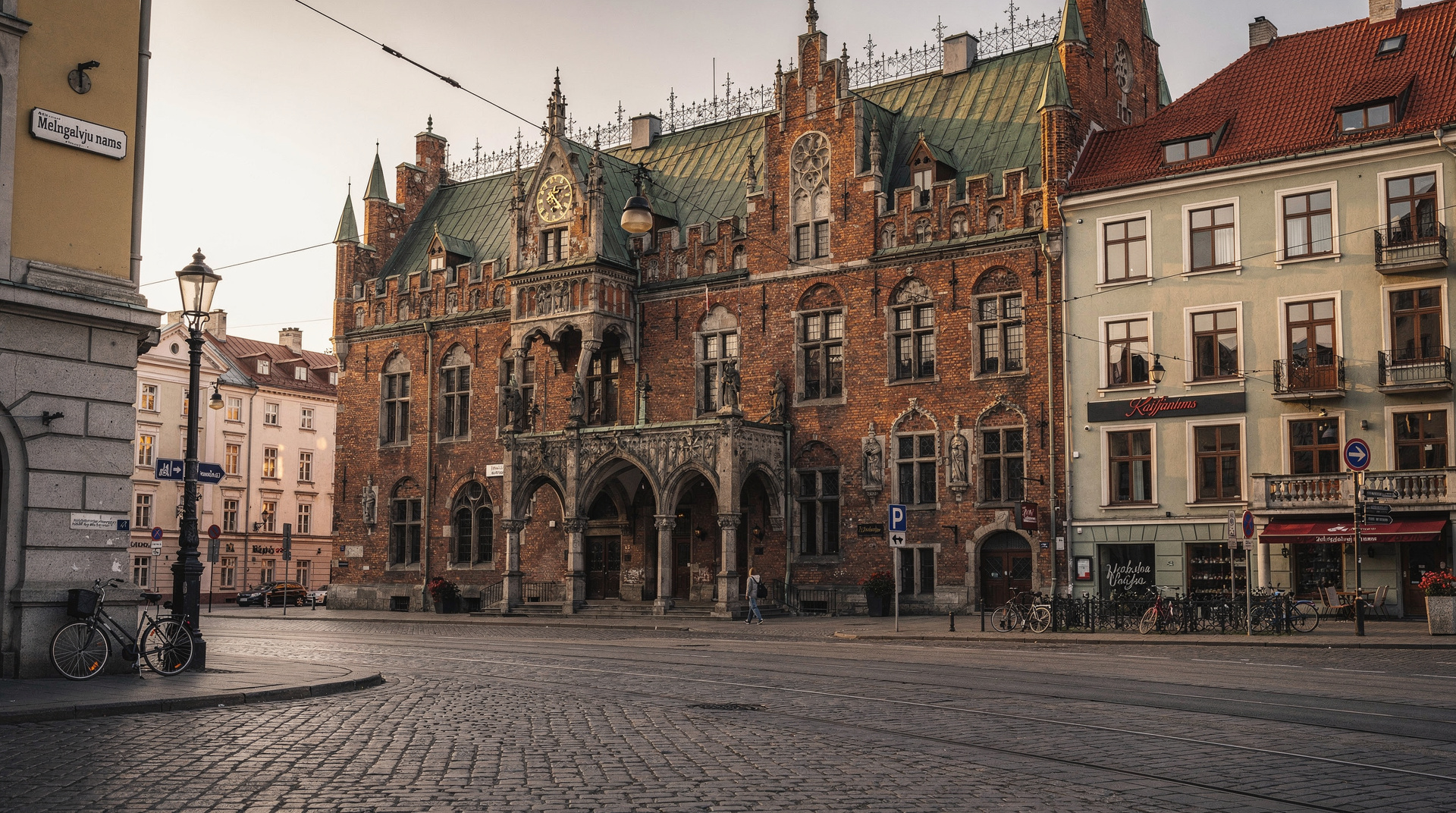
The city-center cycle circuit follows the canal park belt from Bastejkalns south through Kronvalda Park, loops through the Old Town (most of which has dedicated cycling routes separate from the main pedestrian areas), crosses to Ķīpsala island via the Vanšu Bridge, follows the island’s western shore for the Daugava and Old Town skyline view, and returns via the Akmens Bridge.
This route is the foundation for any Riga cycling day — it covers the most attractive urban cycling terrain and can be extended in any direction.
Route 2: Riga to Jūrmala (25 km, 1.5–2 hours)
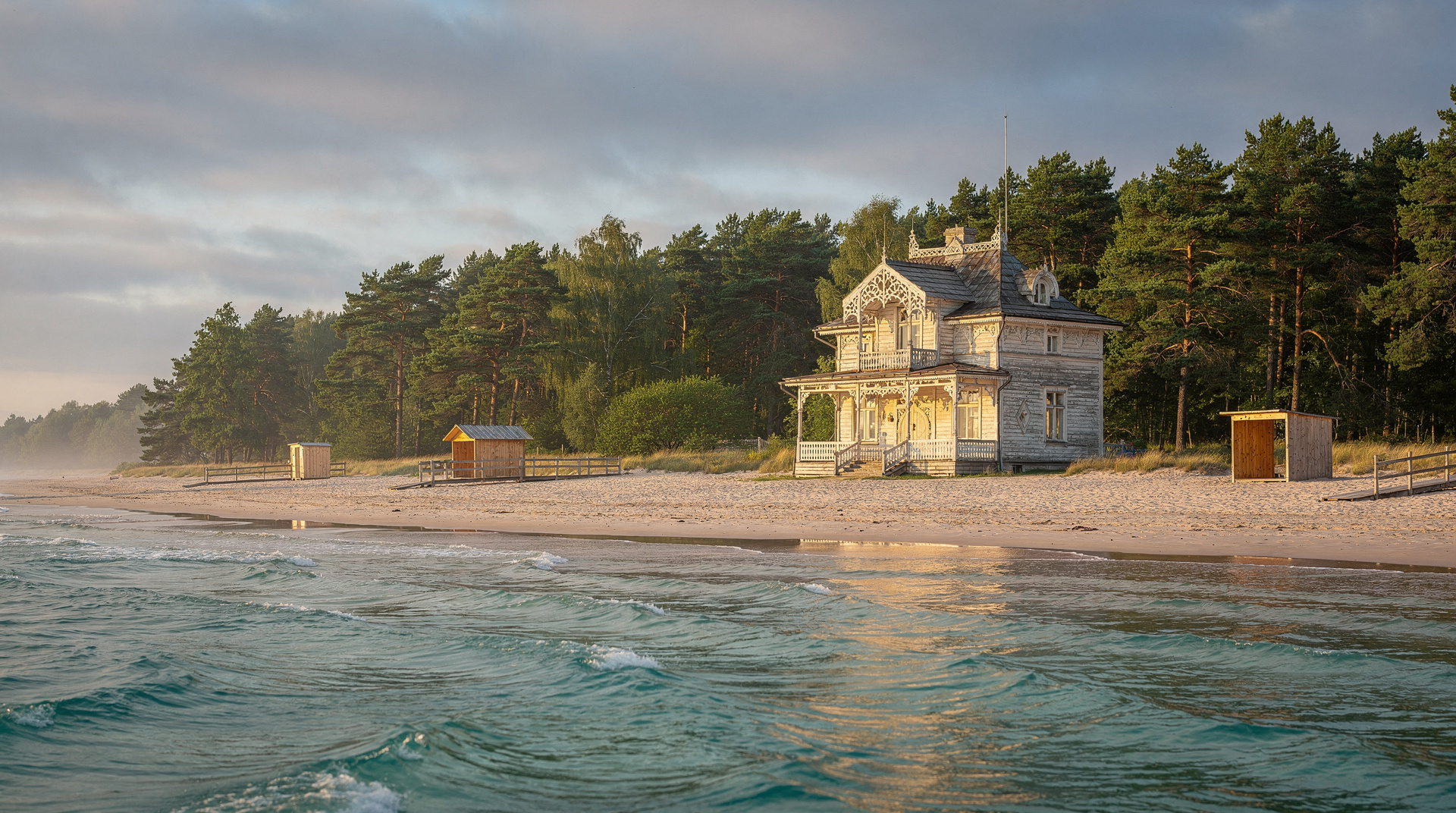
The Riga–Jūrmala cycling route follows the Lielupe River westward from the Riga city limits. The dedicated cycling path runs through pine forest for most of its length, emerging at the Jūrmala beach town of Lielupe/Dubulti.
Starting point: From the Riga city center, cycle west through the Pardaugava district to reach the start of the dedicated riverside cycling path (approximately 5 km from the Old Town, 30 minutes by bike through city streets with cycle lanes).
The Lielupe path: 25 km of tarmac and compacted gravel path through pine forest. Almost entirely flat. The forest provides shade and shelter from coastal winds. The path is well-maintained and signposted.
Beach arrival: The path emerges at the Lielupe and Dubulti sections of Jūrmala. From here, cycle along the beach road east to Majori (the main beach town) or continue west to the quieter Jūrmala sections.
Return options: Cycle back (1.5–2 hours, potentially into the wind), take the train from Majori station to Riga Central (20–25 min, €2 — bikes allowed on trains in the front carriage), or take a Bolt (no bike storage but useful if you need to get back quickly).
Route 3: Mežaparks forest loop (8 km, 1 hour)
From the Old Town, cycle north along the canal and through the residential streets to Mežaparks (approximately 5 km from the center). The forest park has an excellent cycle path network — the main loop through the old-growth oak forest and along the Ķīšezers lake shore is 8 km of smooth tarmac.
The lake shore path is the most beautiful section: the combination of the old oak trees, the lake view, and the occasional sight of the Riga Zoo fence through the trees is distinctive and unexpectedly tranquil for a city environment.
Rain-day strategy
Riga’s weather is variable enough that every cycling plan needs a rain contingency. The practical approach:
- Check the forecast the evening before. The MeteoLV app (Latvian national meteorological service) is the most accurate for the city.
- If rain is forecast for 11:00–14:00, start the ride at 09:00 and return before the front arrives.
- In light rain (less than 2mm/hr), the e-bike makes cycling comfortable with appropriate clothing. Take a shell jacket and overpants.
- In persistent heavy rain, convert the plan to the Ethnographic Open-Air Museum (partially covered) or the National Museum of Art (fully indoor).
The specific advantage of e-bike over standard bike in rain: when you arrive wet, you are less fatigued, which makes the discomfort easier to manage.
The beer cider bike — the social alternative
Riga beer or cider bike tour — social cycling, €42, 1 hourFor groups who want the cycling experience without the planning: the beer cider bike is the most social way to explore the Old Town. Not a genuine cycling experience but consistently entertaining. See the best bike tours guide for the full comparison.
Understanding the e-bike and the city’s cycle infrastructure
Riga’s cycling infrastructure has developed significantly since 2015, when the city began investing in dedicated cycle lanes connecting the major parks and neighborhoods. The current network covers approximately 270 km of designated cycling routes within the city, with the most useful sections for tourists being the canal park belt, the Daugava riverfront, and the routes connecting the center to Mežaparks and Ķīpsala.
The e-bike at €35/day gives you access to this infrastructure with motor assistance that transforms what is theoretically possible in a day. On a standard rental bike, a visitor might realistically cover 15–20 km before fatigue. On an e-bike, 40–50 km is achievable for any reasonably fit person, which means you can combine the city circuit, the Mežaparks loop, and a partial Jūrmala run in a single day without arriving at dinner exhausted.
The infrastructure gaps to know: The Old Town core (Vecrīga) is predominantly pedestrian, and cycling through the main pedestrian streets is prohibited. Cyclists must use designated through-routes or dismount and walk. The main cycle access to the Old Town waterfront is via the Akmens Bridge cycle lane or via the dedicated path along the Daugava embankment. The tourist maps available from rental shops mark these routes clearly.
Cobblestone caution: E-bikes are heavier than standard bikes (typically 20–25 kg versus 12–15 kg for standard), which means cobblestone surfaces require slightly more attention — the additional weight affects handling on uneven surfaces. On the marked cycle routes (tarmac or compacted gravel throughout), weight is not an issue. The issue arises only if you try to cycle through Old Town cobblestone streets that are not designated cycle routes.
The Jūrmala route in detail
The Riga–Jūrmala cycling route is the most ambitious single-day e-bike option from the city, and it is worth planning in detail because the logistics affect the experience significantly.
Starting the Jūrmala route from the center: From the Old Town, cycle west through Āgenskalns and the Pardaugava district (both on cycle lanes) to reach Mangaļsala or the start of the Lielupe riverside path — approximately 5–6 km of city cycling before the dedicated path begins. Budget 40 minutes for this section, which passes through the wooden house neighborhoods of Pardaugava (interesting architecturally) and reaches the pine forest edge at the city boundary.
The Lielupe path: The riverside path runs for 18–20 km from the city edge to Jūrmala’s Lielupe district. The surface varies: tarmac sections in the built-up areas, compacted gravel through the forested middle sections. The compacted gravel is easy on an e-bike even in dry conditions; after rain, the same surface requires more attention to traction.
The beach arrival: The path emerges at Lielupe (the western end of Jūrmala) rather than at Majori (the central beach town). From Lielupe, cycle east along the beach road for 3–4 km to reach Majori and the main beach access. The beach road section is flat, pleasant, and well-surfaced.
Return options and the wind question: The dominant factor in the return journey is wind direction. Southwest winds (the prevailing direction) blow from Jūrmala toward Riga — meaning you are cycling into the wind on the return. On a standard bike, a 25 km return journey into a 20–30 km/h wind is grueling. On an e-bike (level 3–4 assist for the return), it is manageable and even enjoyable. The train alternative (Majori to Riga Central, 20 minutes, €2, bikes allowed in the front carriage) removes the wind variable entirely for those who want to use the e-bike only one way.
The Mežaparks loop — Riga’s best urban cycling
Mežaparks (literally “forest park”) is the old-growth urban forest 5 km north of the Old Town that most Riga visitors miss entirely. On an e-bike, the transit from the center to Mežaparks takes 20–25 minutes and passes through the residential streets of the Ķīpsala and Mežaparks neighborhoods — which are architecturally interesting in their own right, featuring the large bourgeois wooden villas of the early 20th century that replaced the original forest clearings.
Inside the park: The main loop is 8 km of smooth tarmac around the Ķīšezers lake shore and through the park’s old-growth oak sections. The oaks are centuries old — some are 300–400 years old — and the canopy in summer creates a cycling corridor unlike anything in the city center. The lakeside sections have views across the water to the Riga skyline visible through the tree line.
The Riga Zoo detour: Mežaparks is adjacent to the Riga Zoo, and the cycling routes pass along the zoo’s fence perimeter. You can sometimes hear and occasionally see animals through the fence — an unexpected bonus on the cycling route. The zoo itself (€8 adults, €4 children) is worth visiting separately on another day; the cycling route doesn’t require stopping.
Combining the Mežaparks loop with the city circuit: The canal park + Old Town circuit (10 km) → north to Mežaparks (5 km transit) → Mežaparks loop (8 km) → return to city (5 km) gives a 28 km day that covers the essential Riga cycling geography without requiring the full-day commitment of the Jūrmala route. Budget 4–5 hours including stops.
What to carry and how to manage the day
Essential kit: Waterproof jacket (essential even in summer), phone mount for the handlebars (navigation), water (1 liter minimum), and the rental lock combination confirmed before departure. Sunscreen is underestimated in Riga in July — the Baltic summer sun at high latitude is strong despite the temperature feeling moderate.
Navigation: Google Maps cycling mode is accurate for Riga’s cycle infrastructure and updates for new lanes. The offline map download is worth doing before setting out in case of spotty signal in Mežaparks. The rental shop route card is useful for the specific curated routes but not comprehensive for the full city network.
Locking: The GYG rental includes a U-lock. In the Old Town and tourist areas, use the lock — bike theft in Riga is not rampant but does occur. At Mežaparks and along the Jūrmala path, risk is lower but locking whenever leaving the bike unattended is basic practice.
Battery management: Checking the battery level indicator throughout the day is important if you plan a longer route. Full charge on departure (should be standard from the rental operator); at the Jūrmala turnaround point, if the battery is below 40%, use level 1 assist on the return to preserve range. The typical e-bike rental in Riga has a range of 50–70 km on level 2 assist — sufficient for most day routes.
Returning the bike and the end-of-day question
Most GYG e-bike rentals run 6–8 hours from pickup. Return before the agreed time (confirm at pickup) or contact the operator if you want to extend — extensions are usually available at a pro-rated hourly cost but must be arranged in advance.
For visitors who want to combine a guided tour with self-guided riding: the Explorer bike tour (3 hours, €32, guided) in the morning followed by an afternoon e-bike rental for the Mežaparks loop is a full cycling day that covers both the interpreted and the self-directed versions of the same city. This combination is particularly effective on long summer days when 16+ hours of daylight allow relaxed timing across both activities.
Frequently asked questions
How much does electric bike rental cost in Riga?
GYG-verified electric bike rental costs €35 per day (6–24 hours), including helmet, lock, and a suggested route map. Standard bike rental is €15–20/day from rental shops near the Old Town. The e-bike premium is worth it for distances over 15 km or for hills outside the flat city center.What is the best e-bike route in Riga?
The canal parks circuit (10 km, 1–1.5 hours) covers the most attractive urban cycling. For a longer route, the Riga–Jūrmala coastal path (25 km, following the Lielupe river) is excellent on an e-bike — the flat terrain is manageable even on a standard bike, but the e-bike makes the return journey effortless regardless of wind.Is cycling between Riga and Jūrmala practical?
Yes — there is a dedicated cycling path of approximately 25 km from Riga's western edge to Jūrmala's Majori beach, following the Lielupe riverbank through pine forest. On an e-bike, the journey takes 1.5–2 hours each way. Flat terrain throughout.Where do you pick up electric bike rental in Riga?
The GYG e-bike rental pickup is near the Old Town center — the exact address is confirmed in the booking. Rental shops in the Old Town and on Basteja bulvāris also provide standard bikes with some e-bike options. The GYG booking includes advance confirmation of pickup details.Can you cycle in the rain in Riga?
You can, but Riga's summer rainfall (10–12 wet days per month in June–August) makes rain-day planning important. E-bikes are better in wet conditions because reduced physical effort compensates for discomfort. Most rental providers supply rain covers for lights and locks; bring waterproof jacket and overpants for serious rain.