Riga self-guided walking routes
What is the best self-guided walking route in Riga?
For a first visit: the Old Town loop (2 hours, free) covers the essential sights. For architecture: the Art Nouveau walk on Alberta and Elizabetes streets (2 hours) is the most visually rewarding. Combine both for a full-day walking circuit through the best of central Riga.
Walking as the correct speed for Riga
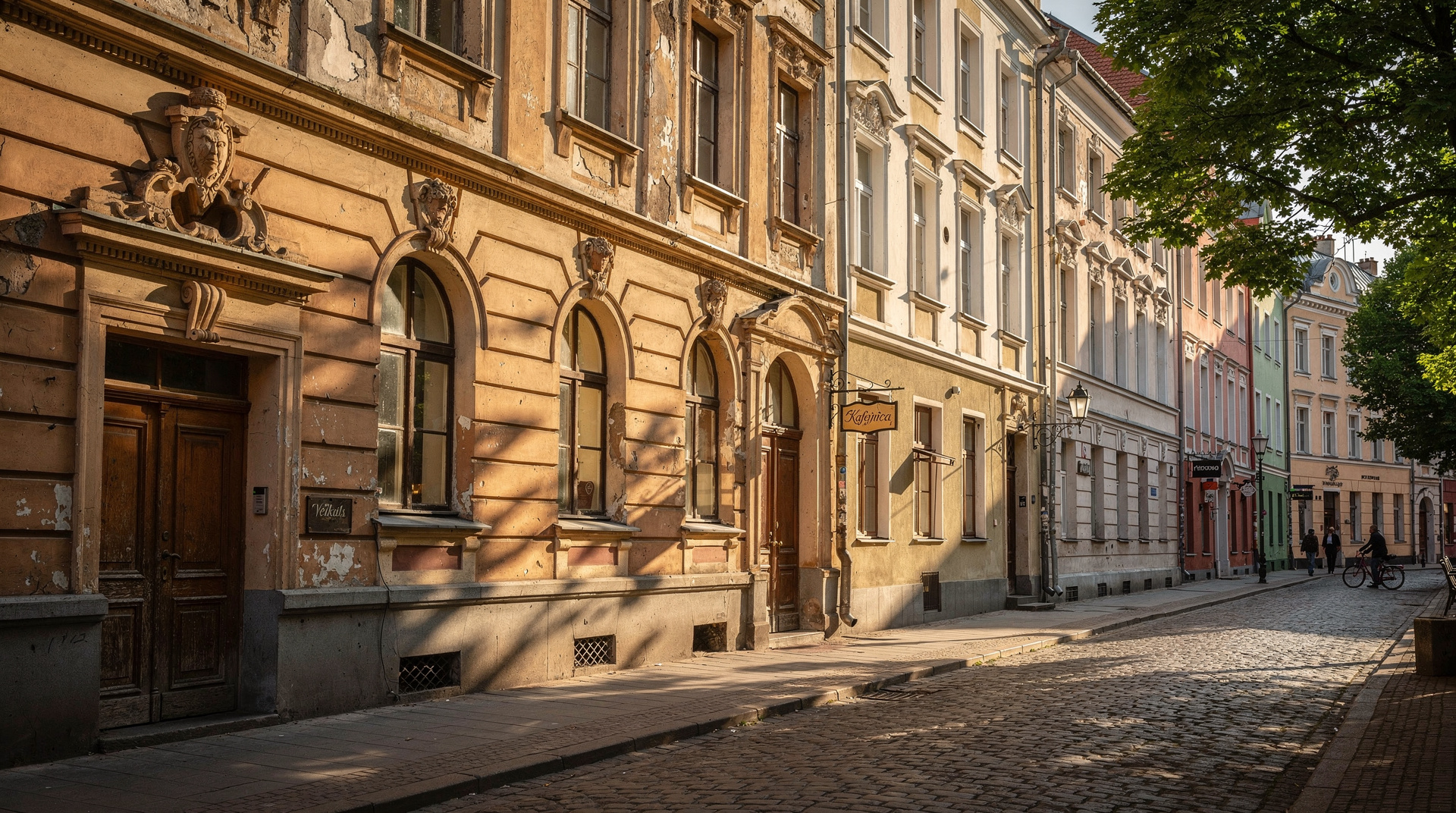
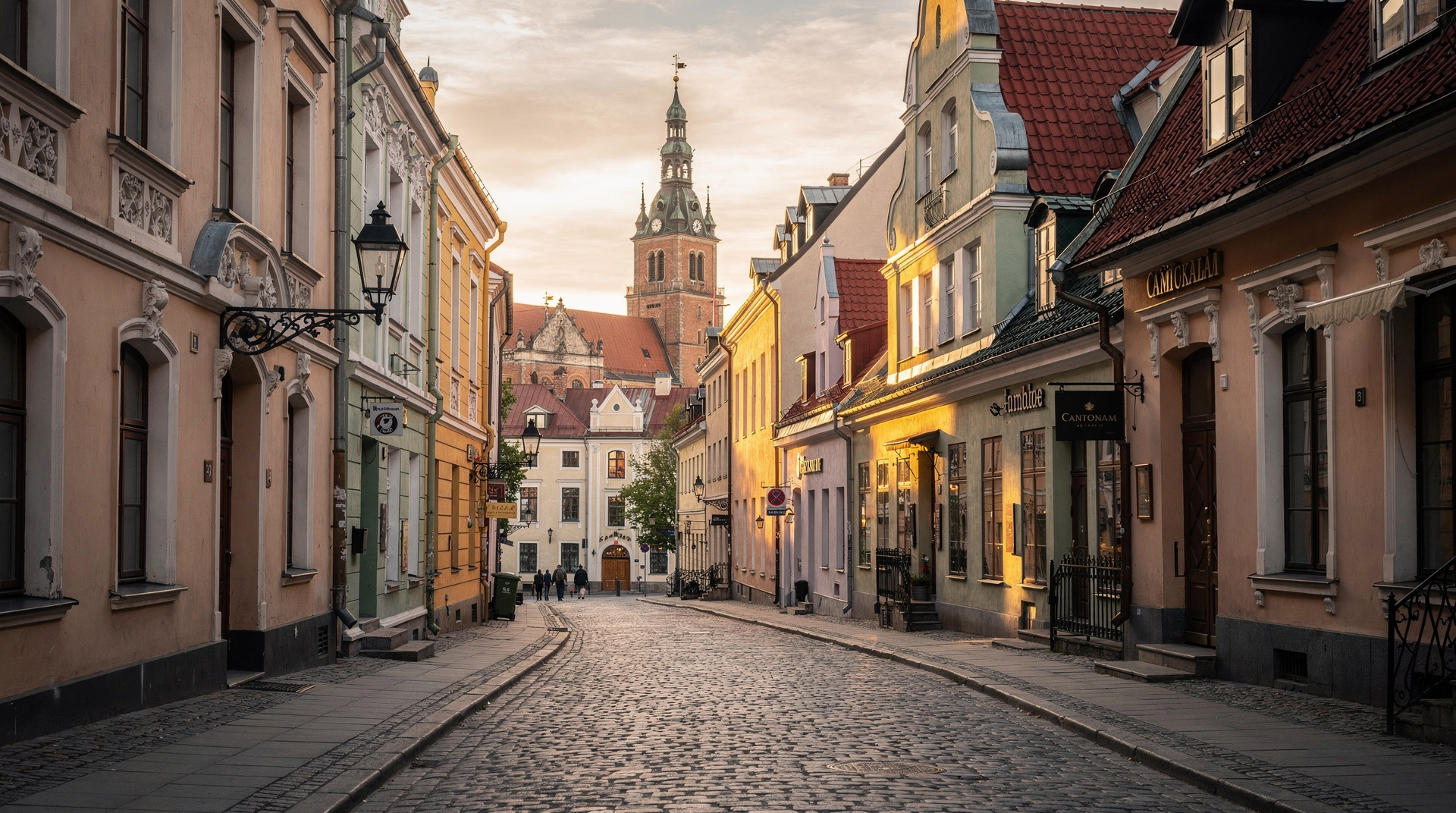
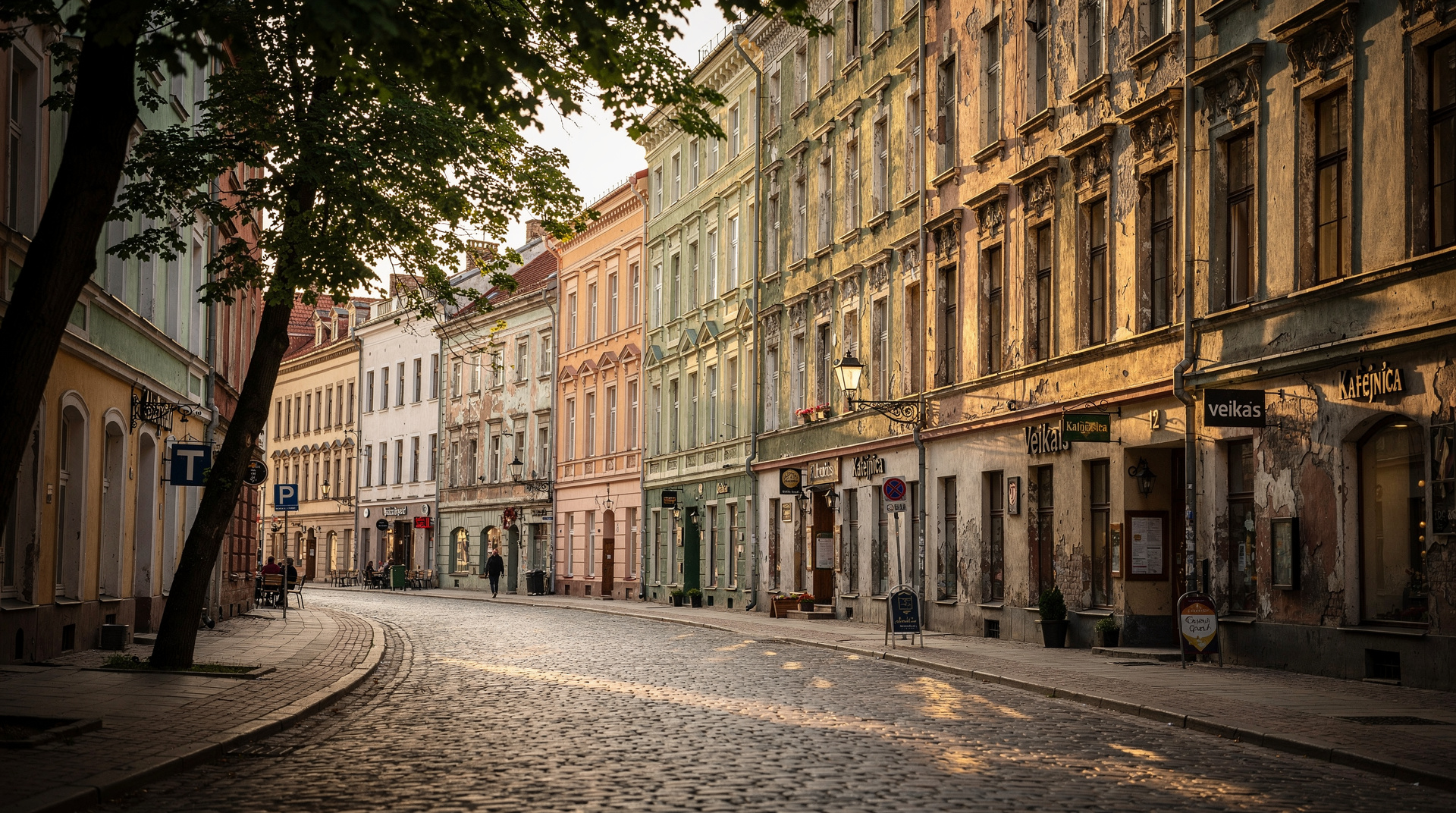
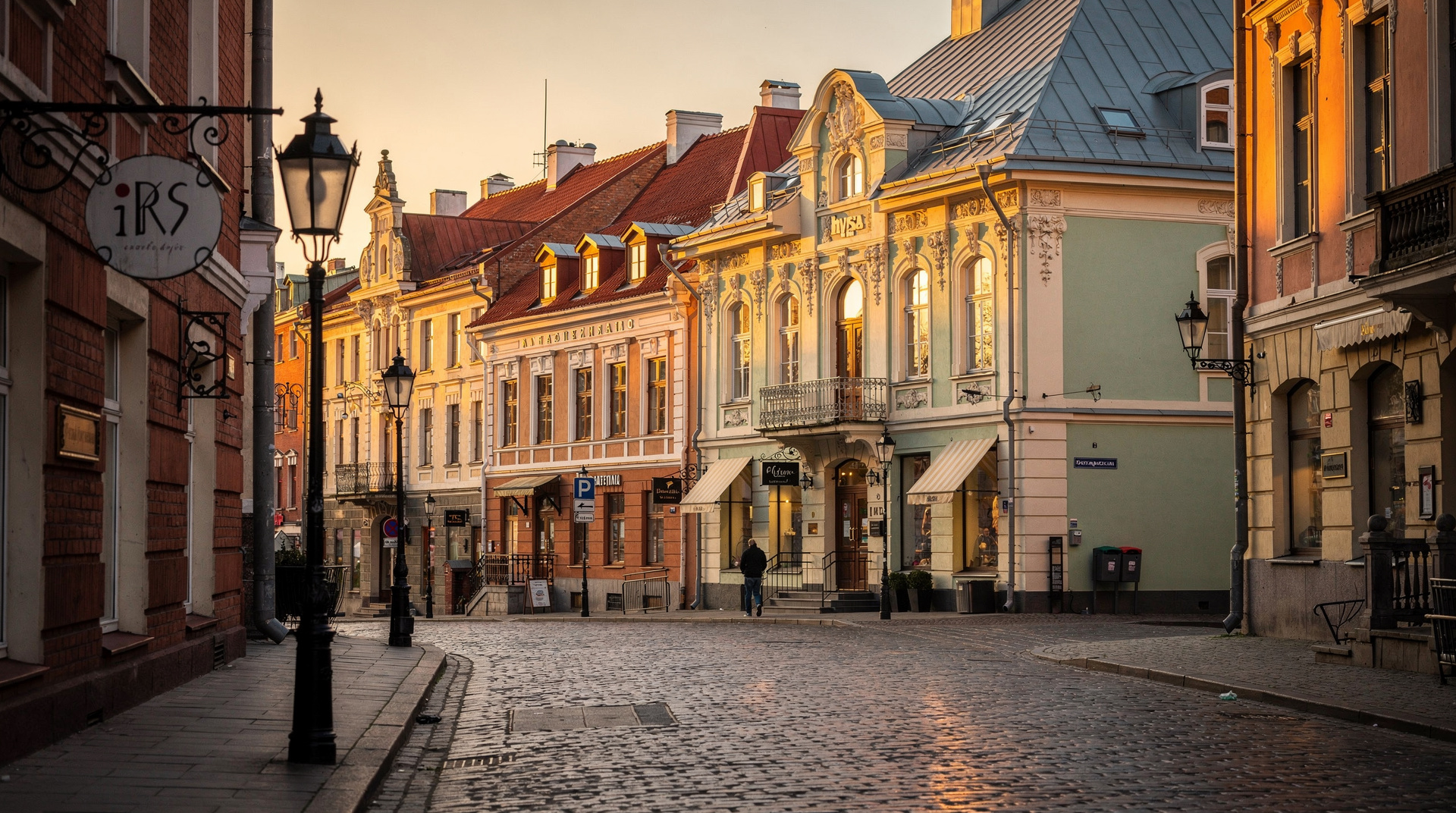
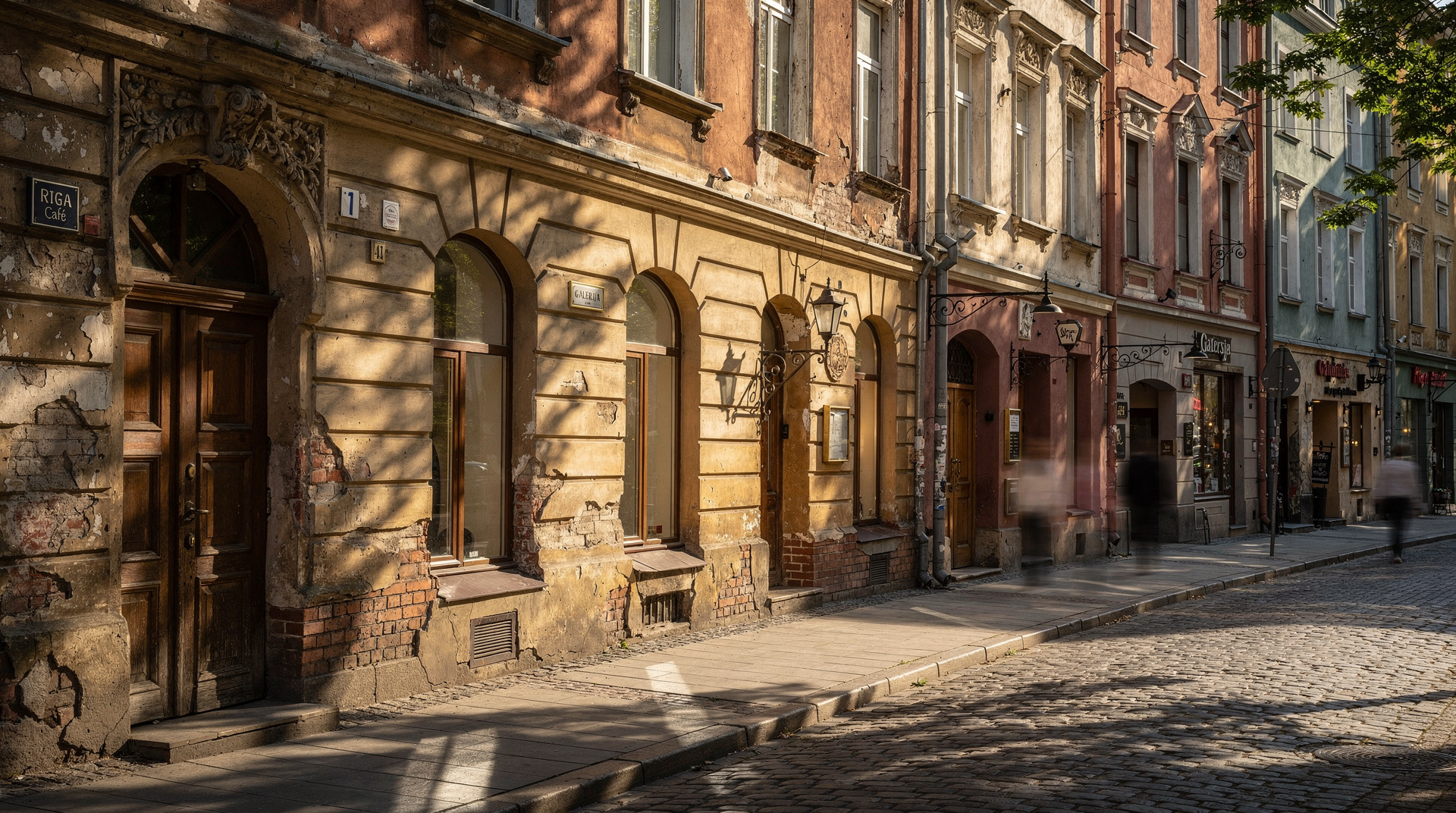
Riga is a city that rewards walking at its own pace. The Art Nouveau facades on Alberta iela are impossible to appreciate at anything faster than a slow pedestrian pace — the sculptural detail (faces, mythological figures, garlands, geometric patterns) requires that you stop, look up, and spend time with individual buildings. The medieval Old Town is small enough that rushing through it misses the courtyards, alleyways, and unexpected architectural transitions that make it distinctive.
This guide covers three walking circuits. Each can be done independently or combined into a full walking day.
Route 1: Old Town historical walk (2 hours, 3.5 km)
Starting point: Freedom Monument (Brīvības piemineklis) at the junction of Brīvības iela and Raiņa bulvāris.
The Freedom Monument (1935) is the starting reference point for all Old Town walks. The figure of Liberty holding three stars represents the three historical Latvian regions — Vidzeme, Kurzeme, and Latgale. It is guarded by stone soldiers and a changing of the guard ceremony occurs at noon on state occasions.
Leg 1 (Freedom Monument to Dome Square): Walk south on Kalku iela into the Old Town. On your left, the Powder Tower (16th century, now a military museum). Continue to Latvijas Nacionālā opera (the National Opera, in a park setting). The main axis of the Old Town (Kaļķu, Kungu, Skārņu ielas) runs southwest from here.
Leg 2 (Three Brothers and Swedish Gate area): Turn right (west) on Peldu iela, then north to Maza Pils iela. The Three Brothers (Trīs brāļi, no. 17, 19, 21) are three medieval townhouses in a row, the oldest domestic buildings surviving in Riga — the white house (no. 17) is 15th century. Continue to the Swedish Gate (17th century, the only surviving city gate in the walls) and the section of the surviving old city wall.
Leg 3 (Dome Square and Cathedral): Follow the wall section south to Doma laukums (Dome Square). The Dome Cathedral (Rīgas Doms, 12th century, with later Gothic additions) dominates the square. The cathedral organ is one of the largest in Europe; lunchtime organ recitals are scheduled most days (€14, book on GYG or at the door). The Dome cloister garden is a peaceful detour.
Leg 4 (House of the Blackheads and Town Hall Square): Walk east from the Dome to Rātslaukums (Town Hall Square). The House of the Blackheads (Melngalvju nams, reconstructed 1995 on the original footprint) is the most photographed building in Riga — a Gothic facade of extraordinary elaboration. The Museum of the Occupation of Latvia is directly opposite (free entry; allow 1.5 hours separately if visiting).
Leg 5 (St. Peter’s Church viewpoint): South along Skārņu iela to St. Peter’s Church (Sv. Pētera baznīca). The church tower elevator gives the best panoramic view over the Old Town (€9, open daily). Return north via the Livu Square entertainment area to the starting point.
Self-guided audio option:
Riga self-guided audio tour — €8, at your own paceA GYG audio tour that covers the Old Town route with commentary on each key building. Accessible on your phone, useful for filling in historical context between stops.
Route 2: Art Nouveau walking circuit (2 hours, 3 km)
Starting point: Freedom Monument, walk north on Elizabetes iela.
The Art Nouveau district (also called the Quiet Center / Klusais centrs) contains the highest concentration of Art Nouveau architecture in the world — over 800 buildings in the style. The most important streets are Alberta iela, Elizabetes iela, Strēlnieku iela, and Brīvības iela.
Alberta iela (the essential street): Turn left from Elizabetes onto Alberta iela. This 200-meter street is the most concentrated showcase of Latvian Jugendstil architecture, much of it designed by Mikhail Eisenstein (father of the filmmaker Sergei Eisenstein). Each building is different in style and detail — screaming masks, female figures, sphinxes, geometric patterns. Stop at no. 2 (the most elaborate facade), no. 4 (quieter but exquisite details), and no. 13 (Art Nouveau Museum, entry €8 for the apartment interior).
Elizabetes iela: Return to Elizabetes and walk south. The buildings here are slightly less theatrical than Alberta iela but arguably more accomplished — the facades integrate the ornamental and the functional more successfully.
Strēlnieku iela and the surrounding blocks: The residential blocks between Alberta and Elizabetes contain dozens of lesser-known Art Nouveau buildings that most guided tours miss. Walking these blocks systematically rewards the attentive visitor.
Practical note: Look up. The Art Nouveau details are on the facades above ground-floor retail level — a consistent mistake of first-time visitors is looking at the street rather than the buildings.
Route 3: Canal park linear walk (1 hour, 4 km)
Starting point: Bastejkalns (Bastion Hill) at the northern end of the canal belt.
The canal park linear walk runs from Bastejkalns south through Kronvalda Park, Vērmanes Garden, and the Esplanade to the Brivibas junction — a 4 km route through Riga’s most elegant public green space that connects the Old Town to the Art Nouveau district through a continuous park corridor.
This walk functions well as a connector between the Old Town and Art Nouveau routes (Route 1 + Route 3 + Route 2 = a full day circuit) or as a standalone evening stroll when the canal light is at its best.
In summer: Canal boats operate from the dock near Bastejkalns (€12–15/hour for private hire; the public boats are better value). The canal walk is at its best on long June evenings when the light is golden from 19:00–22:00 and the linden trees are in bloom.
In winter: The canal sections near the National Theatre sometimes freeze enough for informal skating. The parks are beautiful in snow.
Combining the routes
For a full walking day in Riga:
- Morning: Route 1 (Old Town, 2 hours) — start at the Freedom Monument at 09:00
- Midday: Coffee break at a café on Kalku iela or Livu Square
- Early afternoon: Route 3 (canal walk, 1 hour) heading north
- Afternoon: Route 2 (Art Nouveau, 2 hours) — end at Elizabetes iela by 17:00
Total walking: 10.5 km over 5 hours of active exploration, with natural breaks built in. This covers the essential Riga in a single day without rushing.
What makes each route distinctive — the deeper reading
Old Town route — the Hanseatic city beneath the tourist surface
Riga’s Old Town is one of the most visited historic centers in northern Europe, and the risk of walking it as a passive observer — ticking off the famous buildings without registering what they mean architecturally and historically — is real. The self-guided walk works better if you understand what you are looking at before you start.
The Old Town (Vecrīga) is a Hanseatic trading city from the 13th century, and its medieval street pattern survives intact. The narrow alleys and the irregular spacing of buildings were determined by medieval property laws and trading functions, not urban planning. The warehouses (set back from the main streets), the guildhalls (elevated social institutions requiring prominent facades), and the churches (civic as much as religious) each represent a different aspect of the merchant-city economy.
The Three Brothers are the most important single stop for understanding this. The three houses — built in three different centuries (15th, 17th, and 18th) — illustrate the evolution of domestic architecture on a single plot. The oldest house (white, no. 17) has the narrow medieval proportions of a ground-floor shop with living quarters above. By the 18th-century house, the proportions have opened out, the facade has baroque ornament, and the function is recognizably bourgeois rather than trading. Reading these three buildings together takes 10 minutes and gives you more architectural context than most guided tours provide.
Art Nouveau route — reading the facades
The Art Nouveau district is genuinely the most impressive concentration of this architectural style anywhere in the world — over 800 buildings in various Jugendstil sub-styles, built in a remarkably compressed period (roughly 1899–1913). This concentration happened because Riga was one of the fastest-growing cities in the Russian Empire during this period, and the nouveau riche Latvian and German-Baltic merchant class commissioned buildings in the fashionable international style with local interpretations.
The key to reading Art Nouveau facades is understanding that each building is a program, not decoration. The human faces, animals, mythological figures, and geometric patterns on Mikhail Eisenstein’s Alberta iela buildings are not arbitrary ornament. They encode specific symbolic programs — ideal female beauty, civic virtues, seasonal cycles — that were legible to educated 1900s viewers. Alberta iela no. 2 (the most elaborate building on the street) is organized around a theme of natural forces and human aspiration that runs from the ground floor to the roofline.
Once you know to look for the program, the buildings become three-dimensional narratives rather than decorative facades.
What to do at Alberta iela no. 13: The Art Nouveau Museum apartment at no. 13 is the one essential interior on the walking route. Entry is €8 for a furnished apartment preserved exactly as it would have appeared in 1903 — the furniture, the wallpapers, the ceramics, and the light fittings are all contemporary to the building and allow you to understand the interior culture that the exterior architecture was serving. The museum is small (30–45 minutes) but irreplaceable for understanding Art Nouveau as a total design philosophy rather than just a facade style.
Canal park route — Riga’s civic infrastructure
The canal belt is not just a pleasant park. It was built in the 1860s on the site of the city’s demolished medieval fortifications — the moat and ramparts that had surrounded the Old Town since the medieval period. When the walls came down, the city built a canal park system in their place, connecting the growing 19th-century city to the historic core with a continuous green belt.
Walking the canal belt in the right direction — from north to south, emerging at the Esplanade — traces this transition: you start near the northern end where the canal meets the Daugava, move through the formal park with its 19th-century bridge pavilions, and arrive at the Esplanade near the National Museum of Art, which was built in 1905 as the cultural anchor of the new city. The canal walk is the physical equivalent of a historical timeline.
Street food and café stops on the walking routes
Old Town route: The best coffee stop is on the Doma laukums (Dome Square) at any of the cafés that occupy the square’s ground-floor spaces. Prices are tourist-elevated (€3–4 for coffee) but the setting justifies it. For lunch, the Old Town has genuine restaurants alongside tourist traps — look for places with handwritten menus rather than laminated photo menus. Peldu iela and Kungu iela have several honest Latvian food options.
Art Nouveau route: Miera iela (slightly north of the Art Nouveau district core, accessible with a 10-minute detour) is the neighborhood where local Rigans actually eat and drink — cafés, natural wine bars, and food markets with reasonable prices and no tourist markup. If you are walking the Art Nouveau circuit in the afternoon, the detour to Miera iela for a coffee break repays itself.
Canal route: The canal walk has several outdoor kiosks selling coffee and pastries in summer, particularly around the Bastejkalns end. In cold weather, the National Theatre café (Kronvalda parks end) is a warm stop.
Using the audio guide alongside the self-guided routes
The GYG audio tour covers the Old Town route specifically and is designed to be used at your own pace:
Riga self-guided audio tour of the Old Town — €8, use at your own paceThe audio commentary works well as a supplement to the printed route rather than a replacement for it — it covers the historical background of each stop without dictating the pace or direction of the walk. You can pause, reverse, and revisit commentary in ways that a live guided tour does not allow. For visitors who prefer self-direction but want interpretive depth, this combination is the most flexible option.
Seasonal walking conditions
June–August: Ideal conditions for all three routes. Long evening light (sunset after 22:00 at midsummer) allows evening walks in the Art Nouveau district when the afternoon tourist volume has reduced. The canal park is at its most beautiful with linden trees in bloom in July.
September–October: The best months for the Old Town route — the summer crowds have reduced, the light has a low autumn quality that is excellent for photography, and the canal parks have autumn colors from mid-October.
November–March: The Old Town and Art Nouveau routes are walkable in winter with appropriate clothing, and the absence of crowds makes the architecture easier to see. The canal park is pleasant in snow. The main challenge is daylight — sunset by 16:00 in December limits the walking day significantly. The canal route in particular is better in the afternoon (before the light goes) rather than the morning.
April–May: Spring is underrated for Riga walking. The Old Town emerges from winter quiet, the parks are greening, and the canal system has the freshness of early season without the summer heat or crowds.
Walking with a stroller or wheelchair
The Old Town has significant cobblestone sections that are difficult or impossible for strollers and wheelchairs. The main pedestrian axis (Kalku, Kungu, Skārņu) is partially paved but the side streets are predominantly cobbled. The House of the Blackheads and Town Hall Square area is paved and accessible.
The Art Nouveau district (Alberta iela, Elizabetes iela) is entirely flat and mostly smooth pavement — fully accessible for strollers and wheelchairs and one of the better areas in central Riga for mobility.
The canal park route is entirely paved and flat, with one exception: the Bastejkalns mound itself has steps for the summit viewpoint. The canal-level paths are fully accessible.
Frequently asked questions
Can you walk Riga Old Town on your own without a guide?
Yes, easily. The Old Town is compact (walkable in any direction in 15 minutes), well-signposted in English, and the main sights are within a short distance of each other. A guidebook or app (Google Maps works) is sufficient for a self-guided visit. The official Riga Tourism Board app has a free audio-guided Old Town walk.How long does it take to walk the Riga Old Town?
A focused walk of the main Old Town sights (Freedom Monument, Three Brothers, House of the Blackheads, Town Hall Square, St. Peter's Church, Dome Cathedral area) takes 1.5–2 hours without stops. Adding café stops and museum entries, budget 3–4 hours.Is the Art Nouveau district walkable from the Old Town?
Yes. Alberta iela (the heart of the Art Nouveau district) is approximately 800 m from the Freedom Monument — about 10 minutes' walk north. The full Art Nouveau walking circuit (Alberta, Elizabetes, Strēlnieku, Brīvības ielas) is 2–3 hours and is entirely flat.Is Riga good for walking in general?
Very good. The city center is flat, the Old Town has narrow medieval streets that reward slow exploration, and the canal park system provides a continuous green pedestrian route between the main neighborhoods. Walking is the best way to experience the Art Nouveau architecture — you need to look up at facade details that you miss at any speed.Are there hills in Riga?
No significant hills. The Old Town and center are essentially flat, which is one of the reasons Riga works so well for walking and cycling. The Gauja valley (Sigulda, Turaida) has hills, but these are 50 km from the city.