Rundāle Palace visiting guide
How do you visit Rundāle Palace from Riga?
Rundāle Palace is 77 km south of Riga, most easily reached by organized day trip (€85–95) or private car (1 hour). No direct public bus. Entry €12 for the palace; photography inside requires a separate pass (+€3) — this is not well-communicated at the entrance.
Rundāle Palace — Latvia’s Versailles, and why it deserves the comparison
The comparison of Rundāle Palace to Versailles is a tourist brochure cliché that nonetheless has architectural justification. Both represent the pinnacle of Baroque palace design in their respective regions. Both were created by European dynasties seeking to project power through architectural magnificence. And both have formal French gardens that are among the finest surviving examples of the style in Europe.
The differences are equally important. Versailles receives 8 million visitors a year; Rundāle receives approximately 200,000. You can stand in the Gold Room at Rundāle and photograph the gilded Baroque ceiling without a crowd of other cameras in the frame. You can walk the allées of the rose garden without queuing. The experience is intimate in a way that Versailles, Schönbrunn, and Peterhof can no longer be.
Rundāle is also more isolated than those palaces — 77 km from Riga, surrounded by the flat fields and birch forests of Zemgale, with no major tourist infrastructure immediately around it. This isolation is part of the experience: arriving at a Baroque palace in the middle of Latvian farmland feels unexpectedly surreal, and the contrast between the grandeur of the interior and the quietness of the surrounding countryside is one of Rundāle’s defining qualities.
The palace — what you are looking at
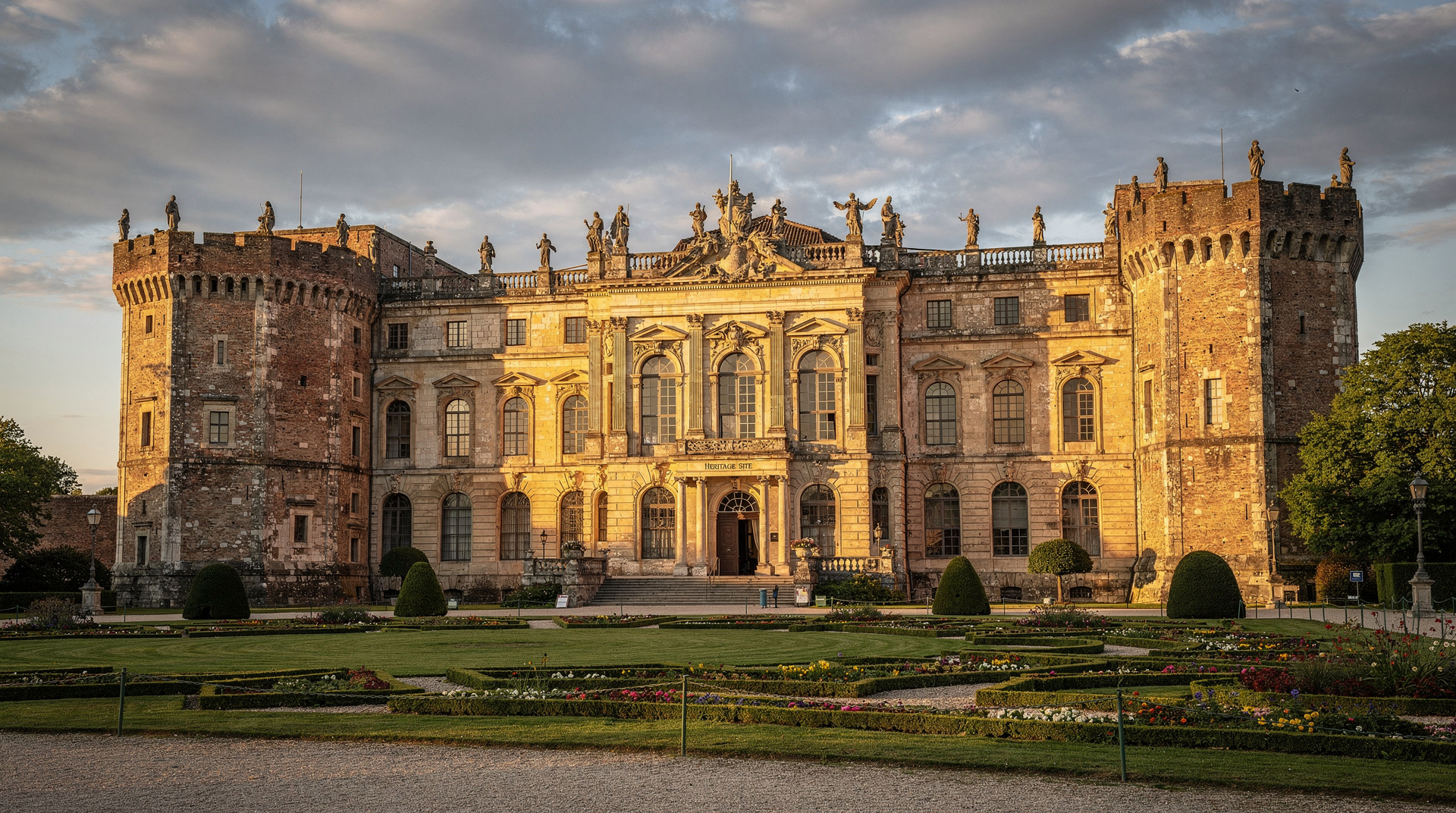
Rundāle was designed by Bartolomeo Francesco Rastrelli in two construction phases: 1736–1740 (the main wings) and 1764–1768 (completion after a 20-year hiatus). Rastrelli’s other commissions include the Winter Palace in St. Petersburg and the Peterhof Grand Palace — this places Rundāle in the highest tier of 18th-century European palace architecture.
The patron was Ernst Johann von Biron, Duke of Courland, who was the most powerful man in Russia as favorite of Empress Anna of Russia. Biron’s ambition was to create a palace in Latvia that would visually equal anything in Western Europe. Rastrelli delivered; the state rooms of Rundāle are among the finest surviving Baroque-Rococo interiors in Northern and Eastern Europe.
The Gold Room (Zelta zāle): The throne room, with elaborate gilded stucco work on every surface and ceiling frescoes by Francesco Martini. The room is 26 meters long and 9 meters high. Even after significant 20th-century damage and the 40-year restoration project begun in 1972, the interior is breathtaking.
The White Room: The ballroom, slightly more restrained than the Gold Room but arguably more beautiful — white stucco work with subtle gilding details and a floor of inlaid parquet that has survived intact.
The Rose Chamber: The Duchess’s bedroom, with rose motif stucco, 18th-century furniture, and a ceiling fresco. The most photographed single room in the palace.
The Long Gallery: A promenading gallery connecting the main wings, with 18th-century portraits of Russian and Courland aristocracy.
The photography pass problem — honest alert
This is the most common complaint from visitors and deserves specific attention. Rundāle Palace charges a separate photography permit (€3) for taking photographs or video inside the palace, including on smartphones. This charge applies on top of the general entry fee (€12).
The permit is sold at the ticket desk but is not prominently communicated in the pre-visit information. Many visitors enter, take photographs, and are stopped by staff midway through and told to purchase the permit or delete their photos. The enforcement is inconsistent — some visitors report being asked, others not — but the charge exists.
Our recommendation: buy the photography permit as a matter of course (€15 total for entry + photos). Do not photograph anything until you have the permit clearly attached to your ticket. The interiors are extraordinary and deserve documentation; just do it legitimately to avoid an unpleasant interruption.
The French garden
The formal French garden behind the palace was designed in the 1980s–2000s as a partial reconstruction of the original 18th-century design, based on historical documentation and archaeological research. It consists of the Rose Garden (2,000 rose bushes of 90 varieties, peak bloom June), a formal geometric parterre, and allées of linden trees.
The garden is included in the entry price and is the most pleasant part of the visit on a good weather day. In June, the rose garden is one of the most densely beautiful spaces in Latvia. In October, the garden’s autumn mood — fallen lindens, empty flowerbeds, the palace facade in late-afternoon light — has a melancholy beauty of its own.
Getting to Rundāle
By organized day trip (recommended):
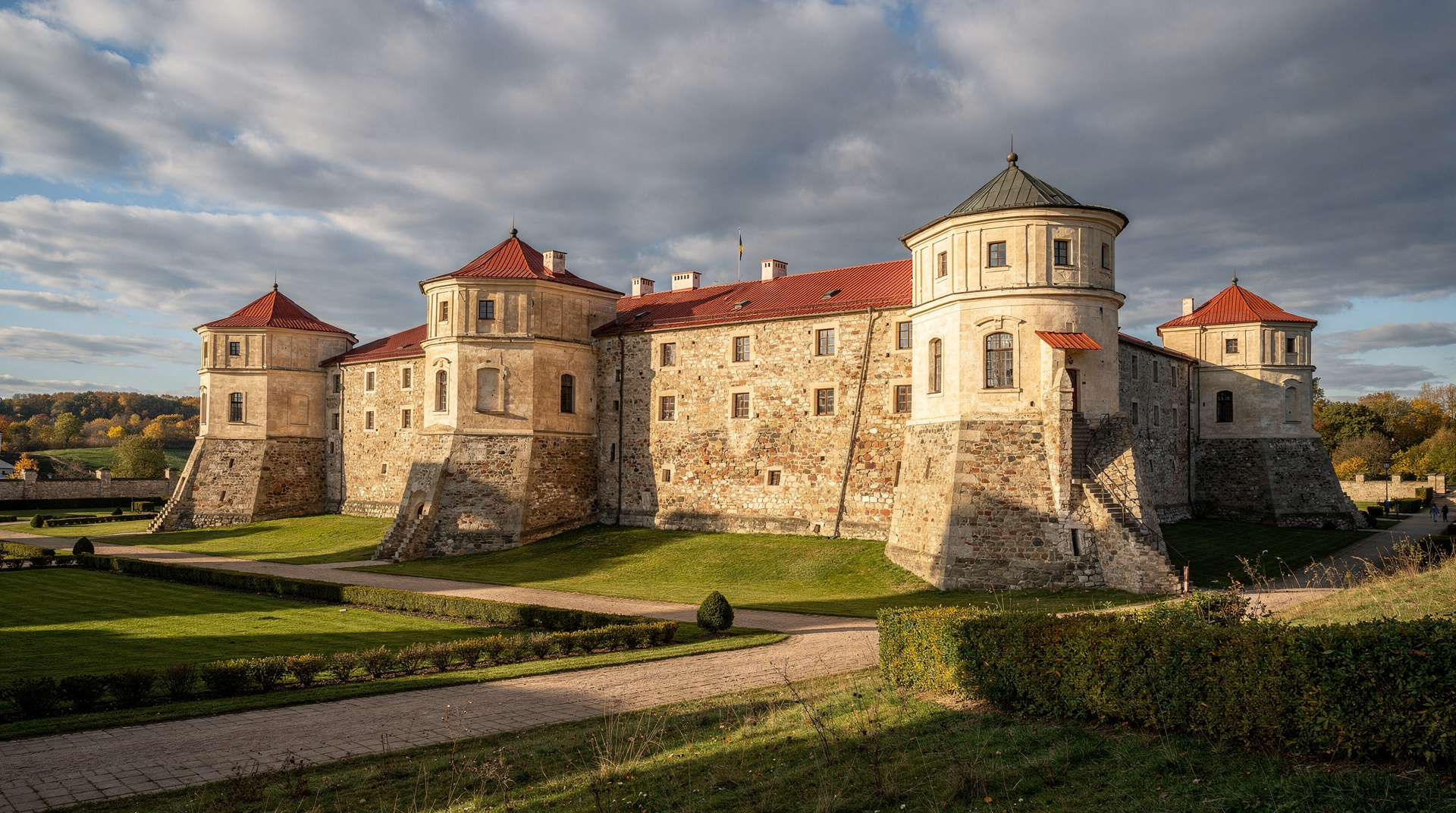
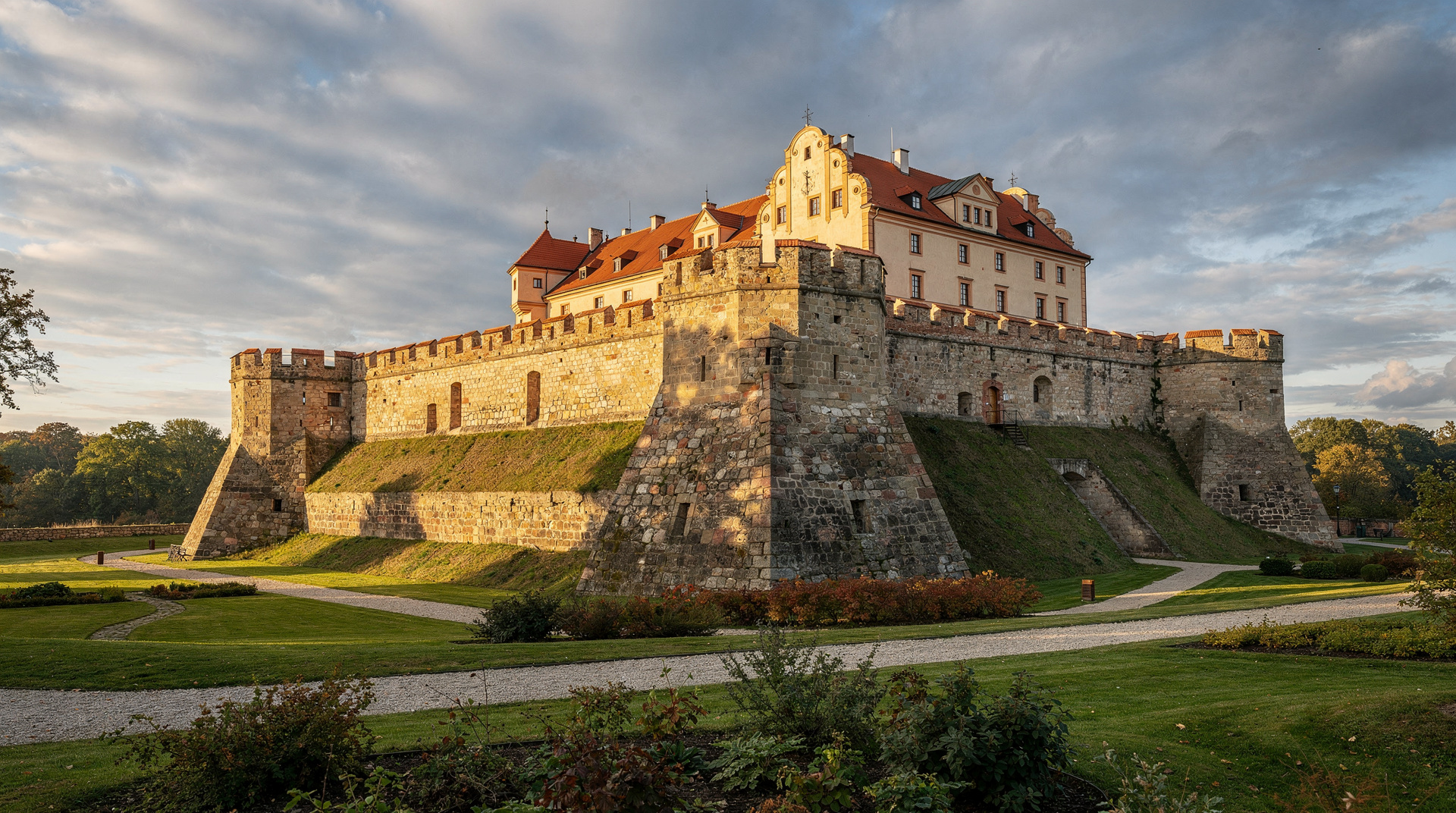
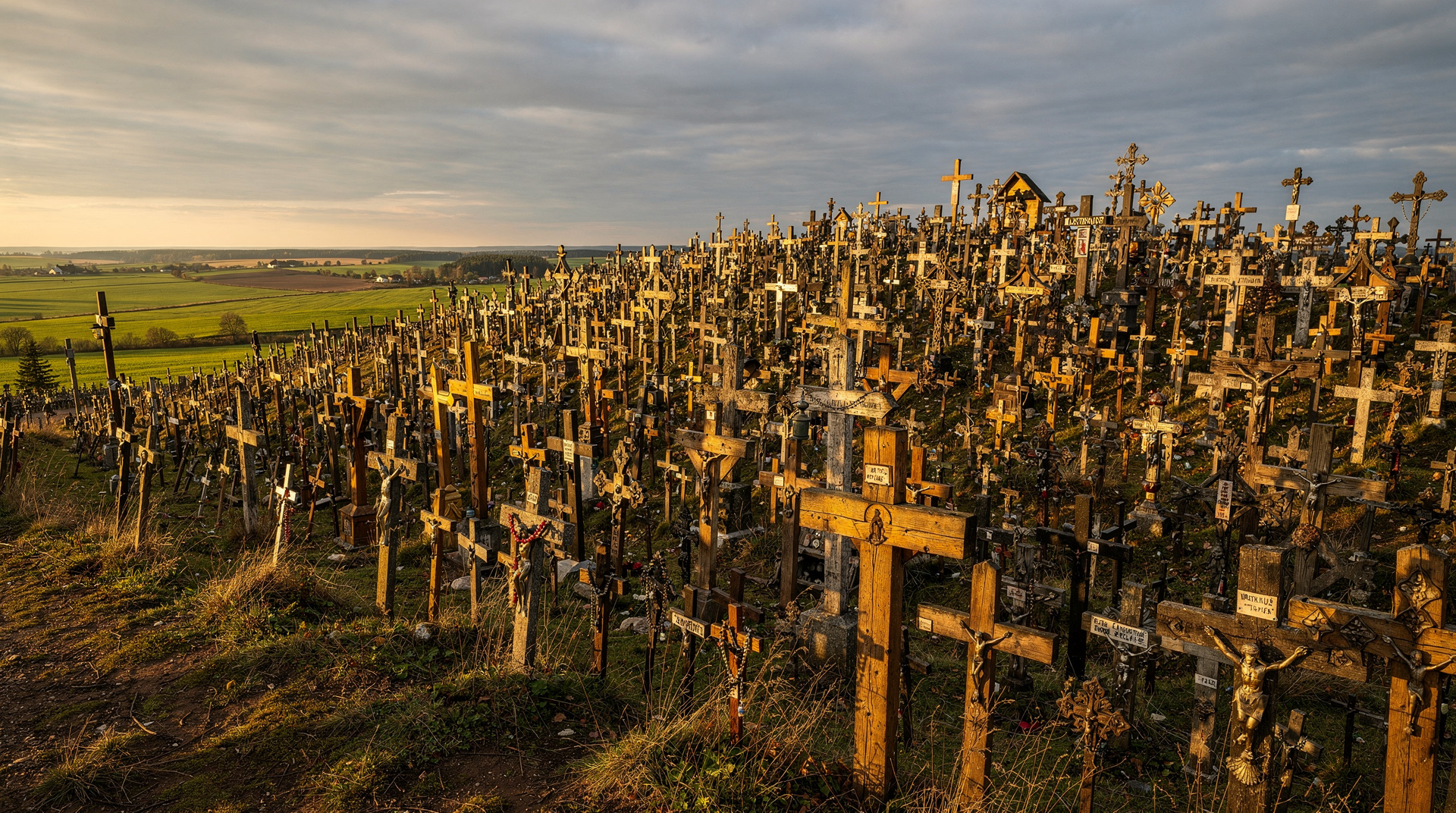
From Riga: day trip to Hill of Crosses, Rundāle Palace and Bauska — €95, 10–11 hours From Riga: Rundāle Palace and Bauska Castle round-trip tour — €85, 7 hoursThe organized tours are the standard approach for visitors without a car, and for good reason: Rundāle is 77 km from Riga with no direct public transport connection. The trips combine Rundāle with Bauska (12 km away) and often with the Hill of Crosses in Lithuania (another 90 km south).
By car: Approximately 1 hour on the A7/P103 motorway south from Riga through Jelgava. Free parking in the palace car park. Having a car allows flexibility with timing — arriving at opening (10:00) when tour groups haven’t yet arrived is the best Rundāle experience.
By bus to Bauska + taxi: Buses from Riga’s international bus terminal to Bauska run roughly hourly, 1 hour journey, €4–6. From Bauska, a taxi to Rundāle is approximately €12 each way. This DIY option works but is time-consuming.
Practical information
Opening hours: May–October 10:00–18:00 daily (last entry 17:00). November–April 10:00–17:00 daily (last entry 16:00). Closed January 1, Christmas Day.
Entry prices: Adults €12. Students/seniors €8. Children (7–18) €6. Under 7 free. Photography permit €3 additional.
Duration: Allow 2.5–3.5 hours for the full palace visit and garden, more if you want to linger in the garden.
On-site: A café in the outbuildings serves coffee and light food. A gift shop sells reproduction prints, Latvian design goods, and palace-related books.
See also: Bauska Castle visiting guide for the companion site, and Rundāle and Bauska day trip from Riga for the logistics of the combined visit.
Rundāle’s restoration story — 40 years of dedicated work
The fact that Rundāle is as beautiful as it is today is itself a remarkable story. When the Soviet authorities took control of the palace in 1940, they converted it to a grain storage facility, a school, and eventually residential apartments. By 1972, when the restoration project began under the direction of Jānis Lejiņš (who devoted his career to the project), the palace was in advanced decay: roofs leaking, stucco collapsing, original furnishings gone, frescoes partially obliterated.
The restoration work — conducted largely by Latvian craftspeople who had to redevelop largely lost techniques of Baroque stucco-making, gold-leaf gilding, and historical parquet production — is one of the most ambitious heritage restoration projects in the Baltic states. After 40 years of work, approximately 40 rooms have been restored to a state comparable to the 18th-century original. Another 60+ rooms remain in various states of restoration.
What this means for visitors: the rooms you see are genuinely restored rather than reconstructed approximations. The stucco in the Gold Room was repaired using historical lime and marble dust plaster matched to the original by chemical analysis. The parquet floor patterns were reconstructed from 18th-century documentation. The experience is authentic in a way that many “restored” palaces in Europe are not.
The Rundāle kitchen and outbuildings
The outbuildings of the Rundāle estate — the servants’ wing, stables, granary, and estate office — survive largely intact and are partially accessible. The estate kitchen, in the northern outbuilding, has been partially interpreted and gives context for the logistics of palace life in the 18th century: the scale of preparation required for state banquets (200+ guests), the supply chain for food and wine from across the Duchy of Courland and the Russian Empire, the workforce (approximately 300 staff serving the palace at its peak).
A café now operates from the outbuilding kitchen, serving coffee and light food. The quality is good by heritage-site café standards — Latvian pastries, local honey, decent coffee — and the setting in the original estate kitchen is more atmospheric than the standard museum café.
Rundāle in Latvian cultural life
Rundāle has become one of the focal points of Latvian cultural programming. The palace hosts:
Rose Festival (June): An annual festival in late June when the rose garden is at peak bloom. Includes live music, artisan markets, and historical re-enactment. The most atmospheric single day to visit Rundāle in the entire year.
Classical music concerts: The White Room (ballroom) hosts a summer concert series of chamber music and organ recitals. The acoustic quality of the original 18th-century space is excellent. Program at rundale.net.
Open-air opera: Occasional evening opera productions in the courtyard in July–August. These require advance booking and are popular with Latvian audiences — book several weeks ahead.
What children will remember about Rundāle
Rundāle is excellent for children in the 8–14 age range who are engaged with history. Specific hooks:
The Gold Room ceiling — the gilded mythological figures and ceiling frescoes can be explained in story terms that engage children (who are the gods, what are they doing, why does the Duke want them on his ceiling).
The scale of the building — how many people lived here, how many servants, what did they eat, how did they keep warm. These practical questions reveal the gulf between 18th-century palace life and modern experience in ways children find genuinely interesting.
The garden fountain restoration — several of the original 18th-century fountain basins in the formal garden have been restored and operate in summer. Watching the working fountains in the context of the palace history (they were installed as a display of technical mastery, because running water was extremely difficult to engineer in the 18th century) gives children a technology-history angle.
The rose garden in June — the sheer density of 2,000 rose bushes in full bloom is a sensory experience that needs no explanation. Children invariably want to be photographed in it.
Frequently asked questions
How much does Rundāle Palace cost to enter?
General entry to the palace staterooms costs €12 for adults, €6 for children/students. A separate photography permit costs €3 and is required to take photos inside (phones included). This additional charge surprises most visitors and is poorly communicated. Budget €15 total if you want photos.How do I get to Rundāle Palace from Riga without a car?
There is no convenient direct public bus. Organized day trips from Riga (€85–95, GYG) are the most practical option. Some regional buses from Bauska (which is reachable by bus from Riga's international bus terminal) connect to Pilsrundāle village near the palace, but this requires a connection and advance planning.When is the best time to visit Rundāle Palace?
May–June for the rose garden in bloom (peak June). September–October for autumn light in the French garden. Avoid July and August weekends when the palace is at maximum visitor capacity and indoor crowds make the ornate rooms feel rushed. Weekday visits are significantly more enjoyable.Is Rundāle Palace worth it compared to Versailles?
Not comparable in scale — Rundāle is far smaller. But in terms of interior quality (the Gold Room, White Room, and Rose Chamber are extraordinary Baroque-Rococo interiors), it exceeds many European palaces of similar scale. The French garden is one of the finest formal gardens in the Baltic states. It is absolutely worth visiting.Can you combine Rundāle with Bauska Castle in one day?
Yes, easily. Bauska is 12 km from Rundāle and the two are always combined in organized day trips. Bauska Castle takes 1–1.5 hours, Rundāle Palace 2–3 hours. The standard day trip also includes the Hill of Crosses in Lithuania, but that adds 1.5 hours of driving each way.Who designed Rundāle Palace?
Bartolomeo Rastrelli, the same architect who designed the Winter Palace in St. Petersburg and the Peterhof Grand Palace, designed Rundāle in two phases (1736–40 and 1764–68). The commission came from Ernst Johann von Biron, Duke of Courland and favorite of Russian Empress Anna. This Rastrelli connection elevates Rundāle to genuine European architectural significance.