2 days in Riga focused on Art Nouveau: the architecture lover's itinerary
Riga: 2-hour history of Art Nouveau walking tour
Duration: 2 hours
- Free cancellation
- Small group
Why Riga is the Art Nouveau capital of the world
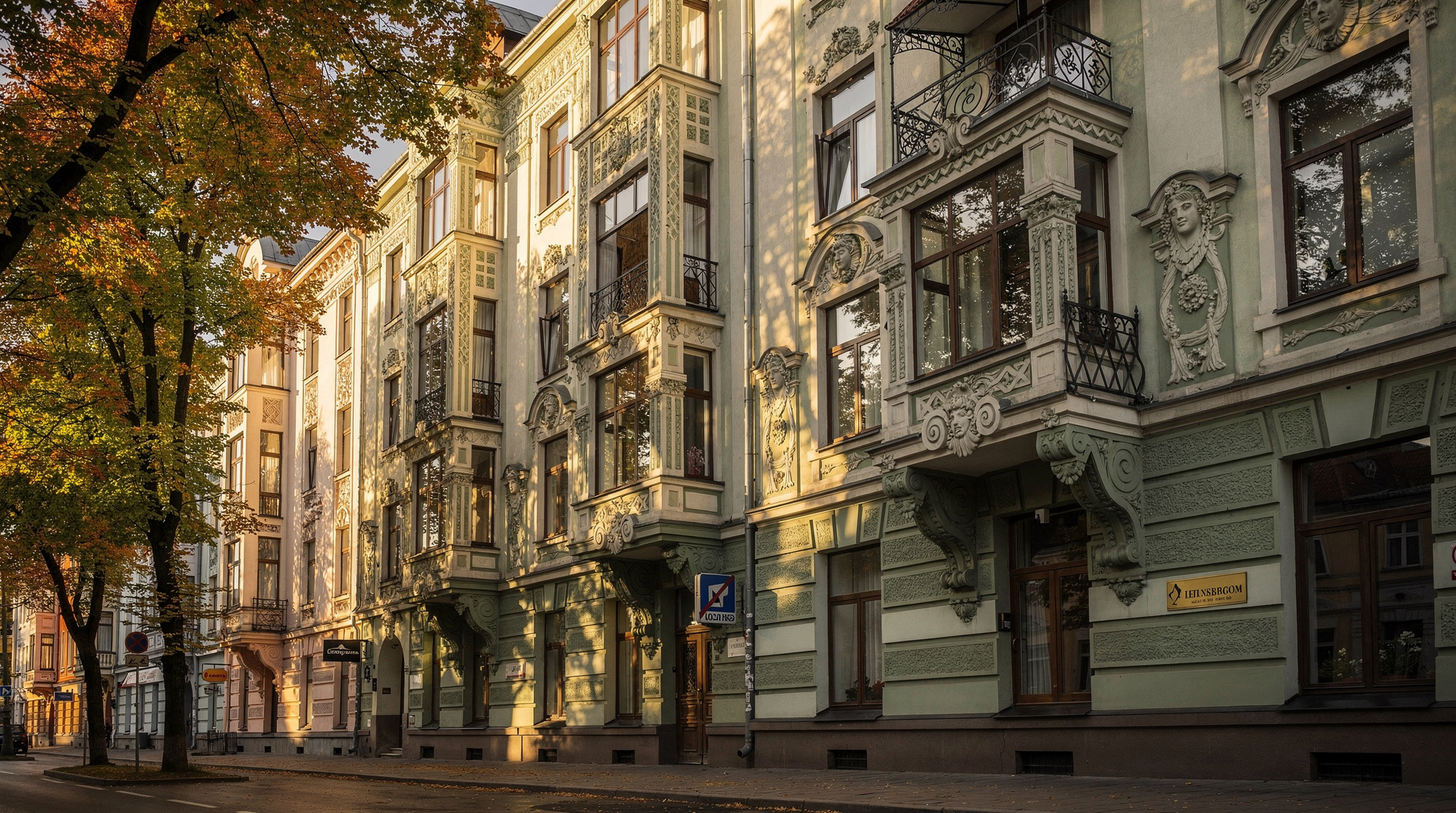
No city in the world has a higher concentration of Art Nouveau architecture than Riga. Not Paris, not Brussels, not Vienna — Riga. The city has approximately 800 Art Nouveau buildings, concentrated in a district that can be walked in half a day, but deserves two full days of attention if you are genuinely interested in architecture.
The reason for this concentration is history: Riga in 1900–1914 was the fastest-growing industrial city in the Russian Empire, and its new bourgeoisie — Baltic German, Latvian, and Russian — built on an extraordinary scale in the prevailing style of the era. The three architects most responsible — Mikhail Eisenstein, Konstantīns Pēkšēns, and Eižens Laube — each developed distinctive interpretations of Art Nouveau that are immediately distinguishable once you know what to look for.
This two-day itinerary is specifically for architecture lovers who want more than a 2-hour guided tour. It covers three distinct Art Nouveau districts, the interior of the Art Nouveau Museum, the Art Nouveau context within the Old Town, and the specific buildings and details that most guided tours rush past.
Total estimated budget, 2 people, 2 days: €400–500. Per person: €200–250.
Riga’s three Art Nouveau districts — a brief primer
District 1: Alberta iela and surroundings (Eclectic/National Romantic, 1901–1912) The highest concentration. Alberta iela 2a, 4, 6, 8, 11, 13 contain Eisenstein’s most dramatic facades — the screaming masks, sphinxes, female figures and plant ornaments that define the “Riga style.” Strēlnieku laukums and Elizabetes iela extend the district.
District 2: Brīvības bulvāris and the Quiet Center (Perpendicular Art Nouveau, 1905–1913) More restrained — geometric verticality, large windows, minimal ornament. The embassy quarter between Brīvības and Elizabetes streets represents the mature phase of the style.
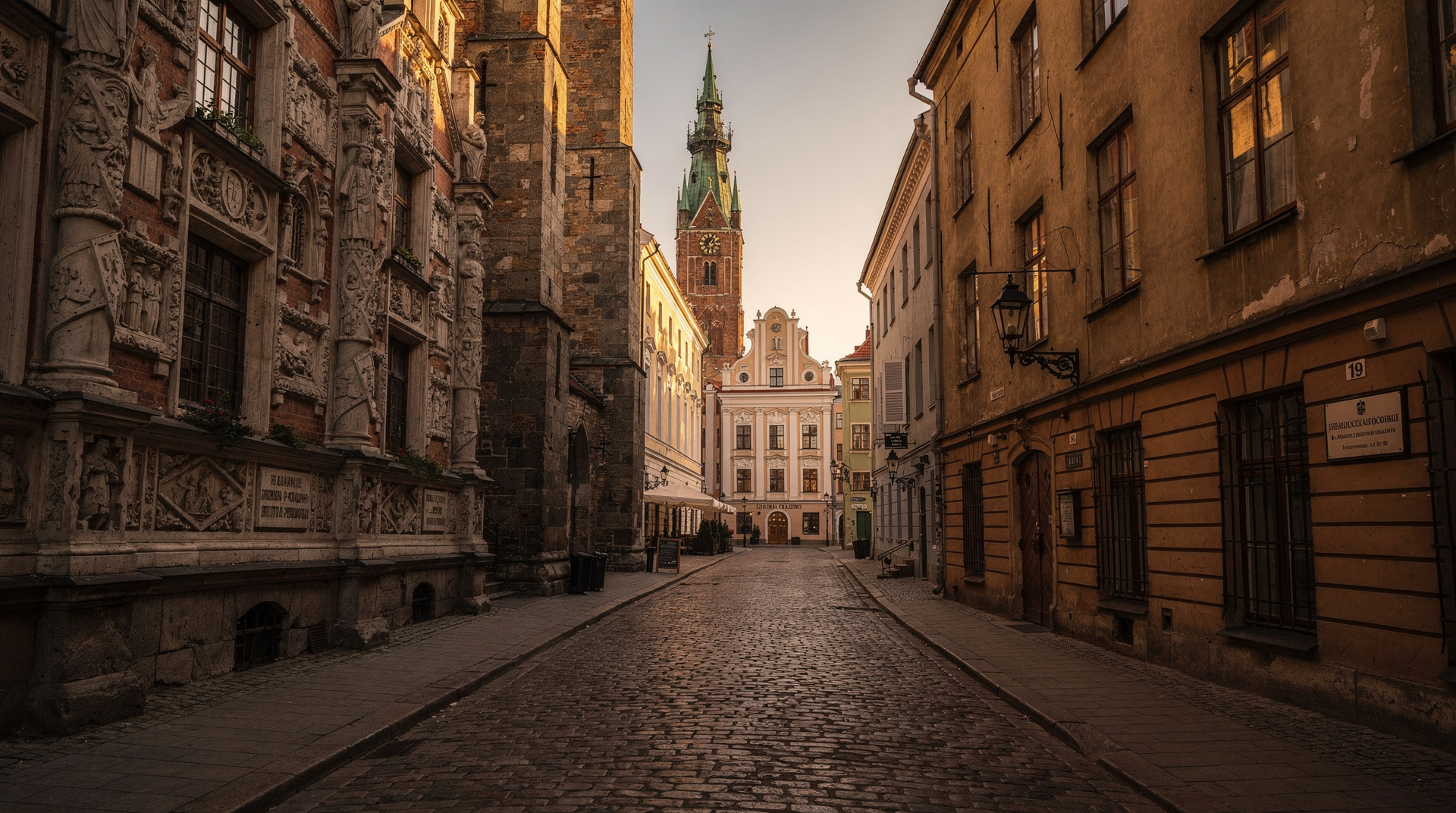
District 3: Old Town Art Nouveau (Early Art Nouveau/Eclectic, 1899–1906) Less obvious but significant — Art Nouveau facades on medieval plot divisions in Vecrīga. Often overlooked by visitors focused on Alberta iela.
At a glance
- Day 1: Art Nouveau tour, Alberta iela in depth, Art Nouveau Museum, evening lecture/walk
- Day 2: Quiet Center, Old Town Art Nouveau, canal cruise for architectural views
Budget breakdown (real EUR, per person)
| Item | Cost |
|---|---|
| Hotel (mid-range, 1 night) | €110 |
| Airport bus 22 (return) | €3 |
| Art Nouveau history tour | €22 |
| Art Nouveau Museum with tour | €32 |
| Old Town walking tour | €22 |
| Canal cruise | €18 |
| Meals (€35/day × 2) | €70 |
| Coffee and refreshments | €20 |
| TOTAL per person | €297 |
USD approx $325. GBP approx £256.
Day 1: Alberta iela, Eisenstein, and the Art Nouveau Museum
Morning (9:30–12:30)
9:30 — Art Nouveau history walking tour. Start with the guided foundation. The Art Nouveau history walking tour (€22, 2 hours) provides the essential framework: the three phases of Riga Art Nouveau, the key architects, the political and economic context (the 1905 Revolution happened in the middle of the Art Nouveau boom and changed the style’s character), and the specific symbolic vocabulary of the facades. Tours depart from the start of Alberta iela.
What the tour covers: Alberta iela buildings 2a (Eisenstein, 1906), 4 (Eisenstein, 1904), 8 (Eisenstein, 1903 — the most dramatic facade), 11 (Laube, 1908 — National Romantic style), 13 (Pēkšēns, 1904). Elizabetes iela 10b (Eisenstein, 1903) and 33 (Pēkšēns, 1901). The tour guide explains the specific symbolism of the motifs — why the screaming faces appear on Alberta iela 8, what the sphinxes on Alberta iela 4 represent, and how to distinguish Eisenstein’s Eclectic Art Nouveau from Laube’s National Romantic interpretation.
After the tour: self-directed time on Alberta iela. Spend another 45 minutes walking Alberta iela end-to-end, now that you have the guide’s framework. Look at details you will miss on a fast walk: the ironwork balcony railings, the ceramic tile details between floors, the way the bay windows are structured to maximise light. Photograph Alberta iela 8 from the far end of the street in morning light.
Lunch (12:30–13:30)
Rocket Bean Roastery (Miera iela 22, 10 minutes from Alberta iela on foot) — the best specialty coffee in Riga, plus light lunch (€8–14). The neighbourhood around Miera iela is itself architecturally interesting — Jugendstil residential buildings in various states of preservation.
Afternoon (14:00–17:30)
14:00 — Art Nouveau Museum with guided tour. The Art Nouveau highlights tour with museum visit (€32, 2.5 hours) is the most comprehensive Art Nouveau experience available — the exterior walking tour plus the interior of the Alberta iela 12 museum (a completely preserved 1903 apartment). The museum apartment was home to a middle-class Latvian family until the 1920s — original wallpaper, furniture, ceramics, parquet floors, and servants’ quarters. The juxtaposition of the inhabited interior with the extraordinary facade exterior makes the whole period concrete in a way that exterior-only tours cannot achieve.
If you prefer the self-guided museum entry (€8, closed Monday), the museum provides an excellent audioguide and the rooms are well-labelled. Allow 1 hour minimum.
16:00 — Elizabetes iela and Strēlnieku laukums. Return to Elizabetes iela for the buildings the morning tour mentioned but passed quickly: Elizabetes iela 10b (Eisenstein’s first major Riga commission, 1903), Elizabetes iela 33 (Pēkšēns, remarkable National Romantic turrets). Walk north along Strēlnieku laukums — a small plaza with several National Romantic buildings. Then loop back via Brīvības iela for the Perpendicular Art Nouveau facades at Brīvības 39, 47, and 53.
17:30 — Coffee break. Vīna Studija (Tērbatas iela 53, natural wine bar, wine by glass €6–10, good charcuterie) — one of the best places in Riga to sit down, share notes, and review photographs.
Evening
Dinner at Hotel Bergs restaurant (Elizabetes iela 83, inside Bergs Bazaar). Staying in the Art Nouveau district for dinner is appropriate for this itinerary — the Bergs Bazaar building itself is Art Nouveau, and the restaurant inside is excellent (mains €20–30). Or Bibliotēka No1 (Tērbatas iela 2, mains €20–30, equally good).
Evening walk: Alberta iela at night. The Eisenstein facades under street lighting are completely different from daylight — the raised reliefs cast deep shadows and the buildings become dramatic rather than ornate. A 20-minute evening walk is worth doing specifically for the photographic opportunity.
Day 2: Quiet Center, Old Town Art Nouveau, and canal views
Morning (9:30–12:30)
9:30 — The Quiet Center (Klusais centrs) in depth. The embassy quarter between Raiņa bulvāris and Elizabetes iela contains the mature phase of Riga Art Nouveau — more restrained, more geometrically confident, and architecturally closer to Vienna Secession than the Eisenstein spectacle. Focus on:
- Raiņa bulvāris 3 (Pēkšēns, 1905): a calm, elegant facade that shows the transition from Eclectic to Perpendicular
- Raiņa bulvāris 8 (Pēkšēns, 1907): one of the best Perpendicular Art Nouveau facades in the city
- Alberta iela 12 (Pēkšēns, 1903, already visited for the museum, but worth seeing again in morning light)
- Elizabetes iela 57 (Laube, 1910): National Romantic, distinctive Latvian folk motifs instead of French or Belgian influences
11:00 — Old Town Art Nouveau walk. The Art Nouveau buildings in Vecrīga are often missed by visitors who think the Old Town is only medieval. Focus on:
- Audēju iela 7 (1901, early Art Nouveau, remarkable ironwork details)
- Grēcinieku iela 12 (1900, transitional from Historicism to Art Nouveau)
- Teātra iela 9 (Art Nouveau on a street otherwise dominated by 18th-century buildings — the contrast is dramatic)
The guided Old Town walking tour (€22, 2 hours) does mention some of these buildings in passing. However, for an architecture-focused visit, doing the Old Town walk as a self-guided morning using the Riga Art Nouveau Architecture Map (available free from the Riga Tourist Information Centre at Rātslaukums 6) is more flexible.
Lunch (12:30–13:30)
Bergs Bazaar (Marijas iela 13) — the courtyard is itself Art Nouveau (the 19th-century trading arcade was built in the late National Romantic period and the facade is part of the architectural narrative). Burgundijas Māja: mains €14–22.
Afternoon (14:00–17:30)
14:00 — Canal cruise for architectural views. The canal and Daugava wooden boat cruise (€18, 1 hour) provides a viewpoint on Riga’s architecture that is impossible from street level — the full sweep of the Old Town, the National Opera House (a remarkable building in its own right), and the canal-side buildings visible from the water. This is particularly good for architecture photographers.
15:15 — National Opera House. The Latvian National Opera (Latvijas Nacionālā opera, Aspazijas bulvāris 3) is one of the finest Neoclassical opera buildings in northern Europe, built 1863–87. The exterior is free to admire; guided tours of the interior are available (check the opera website for schedule, €5–8). Even if tours are not available, the exterior and the square in front of it — with the canal, the Freedom Monument, and the park behind — is one of the finest urban spaces in Riga.
16:00 — Academy of Sciences — the Soviet response. For an architectural history with a sharp contrast, take tram 7 to the Academy of Sciences observation deck. The Panorama Riga observation deck (€8) sits at the top of the most ambitious Soviet-era building in Riga — a 1955 Stalinist neoclassical tower that deliberately echoes the ornamental ambition of the 1905 Art Nouveau era, but in a completely different political context. From the observation deck, you can see the Art Nouveau district, the Old Town, and the Soviet apartment blocks of the outer city simultaneously.
17:00 — Latvian National Museum of Art. Brīvības bulvāris 32 (€6, Tuesday–Sunday). The permanent collection includes paintings by Jānis Rozentāls (1866–1916), Latvia’s most important Art Nouveau-era artist, whose domestic interiors and female portraits are the painted equivalent of what Eisenstein was doing in stone and plaster. The museum building itself is a fine example of Historicism transitioning to National Romantic style (1905).
Evening
Final dinner. Vairāk Saules (Dzirnavu iela 60, mains €18–28) for the best contemporary Latvian cooking. Or Café 13/9 (Gogola iela 13, inside a remarkable Art Nouveau courtyard — even the venue is architecturally significant).
Evening: one more Alberta iela pass. Night photography of the Art Nouveau facades is excellent — the street lights create specific shadow patterns that are impossible in daylight. The best light is 21:00–23:00 in summer, or dusk in autumn.
Where to stay for the Art Nouveau themed visit
Ideal location: Hotel Bergs (Elizabetes iela 83, doubles from €150) — inside Bergs Bazaar, five minutes walk from Alberta iela. Architecturally coherent with the neighbourhood. Excellent restaurant.
Budget option: Any accommodation in the New Town near Elizabetes iela or Brīvības bulvāris puts you in the Art Nouveau district. Centrum Riga (Audēju iela 28, doubles from €90) works.
For the architecture photograph: The best rooms for balcony views of Art Nouveau facades are at the Pullman Riga Old Town (some upper-floor rooms look towards the Art Nouveau district).
Honest tips for the architecture-focused visit
- The Art Nouveau Museum (Alberta iela 12) is closed on Mondays. Plan Day 1 of this itinerary for any day except Monday.
- Morning light on Alberta iela is from the west. If you want the facades photographed at their best, the 10:00–11:00 window in June–August gives soft, directional light on the east-facing facades of Alberta iela.
- Bring a physical map of the Art Nouveau district. The Riga Tourism Board produces an excellent free architecture map; pick it up at the Tourist Information Centre (Rātslaukums 6) before starting.
- The National Romantic phase is more Latvian than the Eisenstein Eclectic phase. Eisenstein was a Russian architect working for German clients; his buildings are international Art Nouveau. Laube’s National Romantic buildings use specifically Latvian folk motifs — sunflowers, amber, pine trees — and are arguably more interesting as a Latvian cultural statement.
- The Old Town Art Nouveau is undervisited. Most architecture visitors spend all their time on Alberta iela and miss the early Art Nouveau experiments on Audēju iela and Teātra iela in Vecrīga.
- Rain is not a problem for Art Nouveau photography. The raised reliefs on Eisenstein’s buildings are particularly dramatic in wet conditions — the water darkens the stone and increases the contrast. Do not cancel the morning walk for overcast weather.
Frequently asked questions about Riga Art Nouveau
Why does Riga have so many Art Nouveau buildings?
The timing was perfect: the Art Nouveau period (roughly 1895–1914) coincided exactly with Riga’s industrial boom as the largest port in the Russian Empire after St. Petersburg. The newly wealthy bourgeoisie commissioned buildings in the prevailing international style on a massive scale. When WWI ended the building boom in 1914, the Art Nouveau era was essentially complete, leaving a remarkably intact district that was never comprehensively redeveloped.
Who was Mikhail Eisenstein?
Mikhail Osipovich Eisenstein (1867–1921) was a Russian civil engineer and architect who became the most prolific Art Nouveau architect in Riga. He designed approximately 30 buildings in the city, most between 1901 and 1906. He is best known for the “screaming mask” buildings on Alberta iela. His son was Sergei Eisenstein, the Soviet film director famous for Battleship Potemkin (1925). The son distanced himself from his father’s extravagant bourgeois work after the revolution.
Is the Art Nouveau Museum worth visiting?
Yes, unconditionally. The preserved 1903 apartment interior at Alberta iela 12 gives the inhabited dimension to what would otherwise be a purely exterior architectural experience. The original wallpaper, furniture, domestic objects, and the servants’ quarters (accessible) make the Edwardian bourgeois life of Art Nouveau-era Riga concrete and human. Allow 45 minutes minimum.
Can I see the Art Nouveau district without a guided tour?
Yes, with the free architecture map from the Tourist Information Centre. However, the guided tour (€22) provides the historical and symbolic context — why specific motifs appear on specific buildings, what they meant to the client and the architect — that transforms a walk from aesthetic appreciation to genuine understanding.
Is the Art Nouveau district close to the Old Town?
Alberta iela is approximately 1.2 km from Town Hall Square — a 15-minute walk, or tram 11 (one stop from Brīvības/Elizabetes intersection). The distance is easy on foot; the route along Brīvības bulvāris or Elizabetes iela passes notable buildings the whole way.
The three Art Nouveau architects — a closer look
Mikhail Eisenstein (1867–1921): A Russian civil engineer who became Riga’s most visible Art Nouveau architect. He worked in what is called “Eclectic Art Nouveau” — an international style drawing on French, Belgian, and Viennese sources but pushed to an extreme of ornamental intensity. The Alberta iela buildings 2a, 4, 6, 8 are his signature works. The screaming faces on Alberta iela 8 (often called the “screaming masks” building) are the most extreme example of his style — the combination of beauty and horror that defines his best work.
Eisenstein designed for Baltic German and Russian clients who wanted to display their prosperity. His buildings are the architectural equivalent of a very expensive suit — conspicuous consumption in stone, iron, and ceramic.
Konstantīns Pēkšēns (1859–1928): The most prolific and balanced of the three major architects. Pēkšēns worked in several styles and is most associated with the transition between Eclectic and Perpendicular Art Nouveau. His buildings are less theatrical than Eisenstein’s but architecturally more sophisticated. Elizabetes iela 33 (1901), Alberta iela 12 (1903, now the Art Nouveau Museum), and Raiņa bulvāris 8 (1907) are his key works in this itinerary.
Eižens Laube (1880–1967): The youngest of the three, and the most explicitly Latvian. Laube worked in the National Romantic style — a Latvian variant of Art Nouveau that drew on specifically Latvian folk motifs (amber, sun patterns, folk weaving geometrics) rather than international Art Nouveau vocabulary. His buildings on Alberta iela 11 and 13 are the clearest expressions of National Romantic architecture in the city: the facades use Latvian folk ornament rather than French or Belgian sources, making them simultaneously local and modern.
Understanding the difference between these three architects transforms the Alberta iela walk from “many decorative facades” to a legible three-way conversation about what it meant to be modern and Latvian in 1900–1914.
Photographing Riga Art Nouveau — technical notes
The facade reliefs are best photographed in oblique light — morning on the west side of the street, late afternoon on the east side. In summer (June–August), the 19:00–21:00 window gives warm directional light on Alberta iela’s east-facing facades.
Overcast days soften the contrast and reduce harsh shadows on the raised reliefs — often better than direct sunlight for the intricate detail work. Rain on the facades increases the visible relief contrast by darkening the recessed areas.
A wide-angle lens (16–24mm equivalent) is useful for the full facades from street level. A moderate telephoto (85–135mm) brings out the decorative details — the ironwork balconies, the ceramic tile friezes between floors, the mask faces.
The best single photograph opportunity: Alberta iela looking north from the southern end of the street in early morning light (09:30–10:30 in summer), with Alberta iela 8 on the right and Alberta iela 11/13 visible further along.
Further reading
- Alberta iela and Elizabetes iela walking route
- Art Nouveau Museum Riga visit guide
- Mikhail Eisenstein buildings tour
- Best Art Nouveau walking tours compared
- Riga Art Nouveau architecture guide
- Riga 2-day best-of itinerary
Top experiences
Bookable activities with verified prices and instant confirmation on GetYourGuide.
Riga: 2-hour history of Art Nouveau walking tour
- Free cancellation
- Small group
Riga: Art Nouveau highlights tour with museum visit
- Museum entry
- Free cancellation
Riga: guided Old Town walking tour
- Free cancellation
- Small group
- English guide
Riga: canal and Daugava cruise on a historic wooden boat
- Free cancellation
- Best seller